

Best Camping Recipes for Small Coolers?
Last Updated: October 30, 2026
Quick Summary
The best camping recipes for small coolers are make-ahead meals like chili and pasta, no-cook lunches, and shelf-stable dinners that need no ice. Plan a menu that uses one protein and one base across several dinners, freeze meals flat in zip-top bags, and keep perishables cold with block ice.
- Cook one 2-pound protein and one base at home, then split into three dinners.
- Freeze meals flat in zip-top bags so they stack like books and cool the cooler.
- Fill about one-third of the cooler with ice and two-thirds with food.
- Keep raw meat on the lowest rack level, sealed, and separate from ready-to-eat food.
- Use a dry bin for snacks and shelf-stable items to reduce how often you open the cooler.
Table of Contents
- Why Small Coolers Need a Different Meal Plan
- Easy Camping Breakfasts That Fit a Small Cooler
- No-Cook Camping Meals for Lunch and Snacks
- Make-Ahead Camping Meals for Campground Dinners
- Non-Perishable Camping Food That Needs No Ice
- Camping Meal Planning: A Day-by-Day Menu for a Small Cooler
- Packing Your Small Cooler So Every Meal Stays Dry and Safe
- Plan Your Next Trip With a Cooler Setup That Fits
- Frequently Asked Questions
Why Small Coolers Need a Different Meal Plan
Small coolers force a different kind of planning. A 20-quart cooler has far less room than the big rolling chests most campers grew up with, so every item has to earn its space. The usual approach of packing a week of food and hoping for the best tends to fall apart quickly.
The good news is that small coolers reward planning. When you match your recipes to the space you actually have, you spend less time digging through melted ice and more time eating.
Easy Camping Breakfasts That Fit a Small Cooler
Breakfast is where small coolers fail most often, because eggs, milk and bacon take up more room than people expect.
Baked egg muffins made at home and reheated over the fire keep well for a day or two in a cooler.
Watch out: raw eggs and dairy should sit on the ice side of the rack, never above a damp layer, or they can warm past safe temperatures during the day.
No-Cook Camping Meals for Lunch and Snacks
No-cook lunches save fuel and keep the cooler closed longer, which is the single biggest factor in how long ice lasts. Wraps, pita pockets with hummus, and sandwiches built with hard cheese and cured meat hold up well.
Snacks are easy to plan around a small cooler. Trail mix, jerky, nut butter packets, cut vegetables in a zip-top bag and whole fruit need little space and almost no ice.
Make-Ahead Camping Meals for Campground Dinners
Make-ahead dinners are the highest-leverage recipes for a small cooler because you do the work at home and the frozen meal itself becomes part of your cooling system. The trick is to build dinners from a small, overlapping ingredient set so you are not packing five half-used containers.
Start with one protein and one base
A common pattern that works well in a 20-quart cooler is to cook one protein (say, 2 pounds of ground beef or 2 pounds of chicken thighs) and one base (1 pound of pasta or 2 cups of rice) at home, then split them into three dinners. That is roughly six servings total, enough for two people over three nights, or four people over one and a half nights. Scaling up past that usually means a second cooler, not a bigger bag.
- Night 1, Chili: Brown the ground beef with onion, canned diced tomatoes, and chili powder. Freeze flat in a quart zip-top bag.
- Night 2, Pasta with meat sauce: Reserve about a third of the browned beef, add a jar of marinara, and pack with cooked pasta in a sealed container.
- Night 3, Tacos or taco soup: Use the last third of the beef with a packet of taco seasoning and a can of beans; pack tortillas separately in a dry bin.
If you prefer chicken, poach or roast 2 pounds of thighs, then divide into curry (with a jar of curry sauce and a can of chickpeas), chicken-and-rice soup (with broth and carrots), and a pesto pasta toss. The same 2 pounds of protein and 1 pound of pasta or 2 cups of rice covers three dinners for two people.
Freeze flat, stack like books
Freeze each meal in a quart or gallon zip-top bag laid flat on a sheet pan. Once solid, the bags stack like books and take up far less cooler floor space than round containers.
Label every bag with the date, the contents, and the reheat time. A permanent marker on the bag is enough; a strip of painter's tape works if you are reusing containers.
Reheat times that match a small cooler trip
- Chili or stew, frozen: Thaw in the cooler during the day, then reheat in a Dutch oven over medium coals for about 15-20 minutes, stirring often.
- Pasta with sauce, refrigerated: About 10 minutes in a covered Dutch oven or skillet with a splash of water.
- Curry with chickpeas: About 15 minutes; add a quarter cup of water if it thickens too much.
- Soup from frozen: About 20-25 minutes; bring to a simmer and hold for 5 minutes.
What not to make ahead
Skip anything that needs to stay crisp or separate, like fried food, green salads, or pasta tossed with a cream sauce that will break on reheat. Those are better as no-cook lunches or dry-bin meals. Also skip large batches of rice held more than a day; cooked rice is a well-known food-safety risk and is better cooked fresh at camp or frozen in small portions and reheated thoroughly.
A note on portion scaling
For a two-person trip, aim for about 1 pound of protein and 1 cup of dry pasta or rice per dinner. For four people, double it, but check your cooler's usable interior first. A 20-quart cooler typically holds about 12 to 14 quarts of food and ice combined once you account for the rack and block ice, so two frozen gallon bags plus a few small containers is often the realistic ceiling.
Non-Perishable Camping Food That Needs No Ice
Some foods never need the cooler at all. Shelf-stable ingredients such as rolled oats, dried beans, rice, couscous, nuts, seeds, dried fruit and canned goods can ride in a dry bin and cook at camp with no refrigeration.
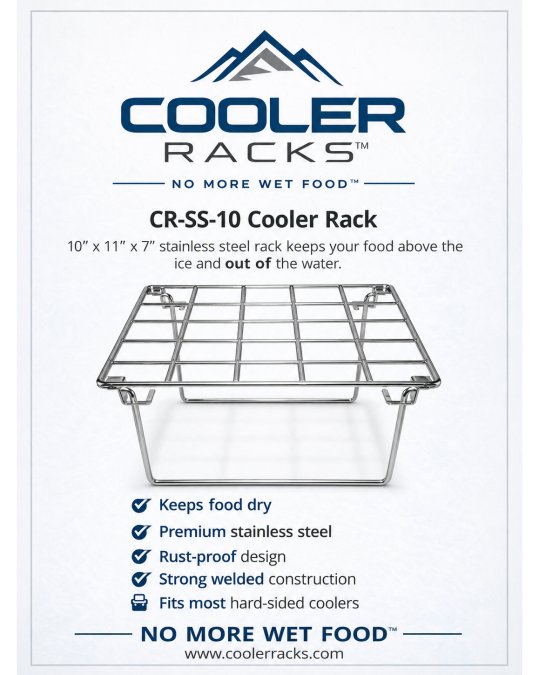
CR-SS-10 Compact Cooler Rack (10″) →
Plan at least half your dinners around non-perishable ingredients. Pasta with olive oil and dried herbs, lentil soup from a dry mix, and tortilla pizzas on the grill are easy examples. The result is a lighter cooler, less melted ice and fewer food-safety risks as the trip goes on.
Camping Meal Planning: A Day-by-Day Menu for a Small Cooler
Plan the menu before you buy the groceries, and count the cooler space each meal needs. A sample three-day plan for a small cooler might look like this:
| Day | Breakfast | Lunch | Dinner |
|---|---|---|---|
| Day 1 | Egg muffins (reheated) | Pita with hummus | Frozen chili, reheated |
| Day 2 | Oatmeal with dried fruit | Wraps with cured meat | One-pot pasta with sausage |
| Day 3 | Breakfast burritos | Trail mix and fruit | Lentil soup from dry mix |
Perishables such as eggs, meats and dairy should be used first, and shelf-stable items last. This order keeps the riskiest foods cold for the shortest time. Keep a written list of what is in the cooler so you do not open it more than necessary.
Packing Your Small Cooler So Every Meal Stays Dry and Safe
Packing order matters as much as the recipes, but on a small cooler the bigger lever is temperature management. A 20-quart cooler loses cold air fast every time the lid opens, so the goal is to open it as few times as possible and to keep the cold mass concentrated.
The 2:1 rule and why block ice wins
A common rule of thumb is to fill roughly one-third of the cooler's interior with ice and two-thirds with food, and to use block ice rather than cubes for trips longer than a day.
Start with block ice on the bottom, then place a stainless steel rack above it so food sits above the meltwater. Load raw meat and anything that must stay coldest on the lowest rack level, sealed well, and keep ready-to-eat foods and drinks separate.
Temperature targets and how long food lasts
Food safety guidance generally recommends keeping perishable food at or below 40°F and checking the official FDA guidance for handling perishables. How long a cooler holds that range depends on the cooler, ice, and weather.
A simple thermometer clipped to the inside of the lid lets you check without unpacking. If you see 45°F or higher at the food level, move the cooler to shade, add ice, and eat the most perishable items first.
Opening frequency: the hidden variable
Every lid opening lets cold air escape and warm air in, so opening the cooler less often helps keep food cold. A separate dry bin for snacks, trail mix, and fruit means you are not opening the main cooler for lunch at all.
If you are in and out all day, a second small cooler for drinks is worth the space. Drinks are the most-opened item and the least temperature-sensitive, so moving them out of the main cooler protects the food.
Pre-chill and pre-freeze
A cooler that starts cold stays cold longer. Chill the cooler with a bag of ice for an hour before loading, and pre-freeze any water bottles or meals you plan to use as ice. Frozen water bottles are especially useful in a small cooler because they do not leave meltwater and you can drink them as they thaw.
Rack setup for small coolers
The Double Cooler Rack Setup gives you two elevated levels, so you can split snacks from meals. For a single level, the CR-SS-15 Full Size Cooler Rack keeps food above the water line. The CR-SS-10 Compact Cooler Rack suits tighter spaces.
Plan Your Next Trip With a Cooler Setup That Fits
Start with your cooler's usable interior size, then choose recipes that match it. Plan each day's meals, keep shelf-stable food in a dry bin, and use block ice and an elevated rack to keep everything dry. Small coolers work well when every item has a planned place.
Frequently Asked Questions
What are the best meals to take camping in a small cooler?
The best meals for a small cooler are ones that need little or no refrigeration: wraps with deli meat and hard cheese, hummus and vegetable packs, hard-boiled eggs, and sealed yogurt tubes. Pair these with shelf-stable staples like tortillas, peanut butter, oats and dried fruit. Keep the perishable items on a rack above the ice so they stay dry, and limit the cooler to what needs cooling. A small cooler stretches furthest when at least half the menu is non-perishable.
What camping foods need the least cooler space?
Foods that are shelf-stable or pre-packaged take up the least cooler space. Examples include jerky, nut butter packets, crackers, tortillas, instant oatmeal, dehydrated meals and canned goods with pull tabs. Repackaging items into zip-top bags or a Mason jar removes bulky packaging and makes them easier to stack. Store these in your pantry bin rather than the cooler, and reserve the cooler for dairy, meat and produce that must stay cold.
What can I make ahead for a camping trip?
Many camp meals can be cooked at home and reheated at the campsite. Good options include chili, stew, curry, breakfast burritos, baked egg muffins and French toast casserole. Freeze portions flat in bags so they act as extra ice while thawing. Frozen sauces and marinades also work well. Once cooked, cool foods before packing and keep perishable food cold.
How do you keep camping food dry in a cooler?
Keep food out of meltwater by elevating it above the ice. A folding stainless steel cooler rack does this, creating a dry shelf for sandwiches, produce and containers while drinks and ice sit below. Pack food in sealed, waterproof containers or zip-top bags as an added layer. Drain melted water regularly, and freeze water bottles to use as ice that does not leak.
