

Best Cooler Rack Systems for Boat Decks Compared
Last Updated: November 11, 2026
Quick Summary
The best cooler rack for a boat deck is a folding 304 stainless steel rack that holds food above melted ice water. Choose it by the usable interior length of your cooler, then pick one rack for a small cooler or two levels for a larger one.
- Cooler Racks sells folding 304 food-grade stainless steel racks with a 7-inch elevation.
- Choose the rack by the cooler's usable interior length and width, not its advertised size.
- A 10-inch interior fits the Compact Cooler Rack at $29.99.
- The 25-inch Full Cooler System at $59.99 gives two elevated food areas.
- Confirm backing structure before drilling any deck-mounted cooler mount.
Table of Contents
- Why a Cooler Rack Matters on a Boat Deck
- Types of Cooler Rack Systems for Boat Decks
- Boat Cooler Mounting Kit Options and Installation
- Aluminum Cooler Rack for Boat vs. Stainless Steel
- Mounting a YETI Cooler Mount for Boat Use
- Pontoon Boat Cooler Rack Setups
- Keeping Your Cooler Secure Underway and Fit Checks
- Choosing Your Cooler Rack for Your Boat Deck
- Frequently Asked Questions
Why a Cooler Rack Matters on a Boat Deck
Melted ice pools at the bottom of a cooler, and anything sitting in it soaks up that water. Sandwiches turn soggy, produce bruises, and packaged food gets waterlogged. On a boat, the problem is worse because coolers slide, tip, and get opened repeatedly in tight spaces, so the contents shift and the water sloshes.
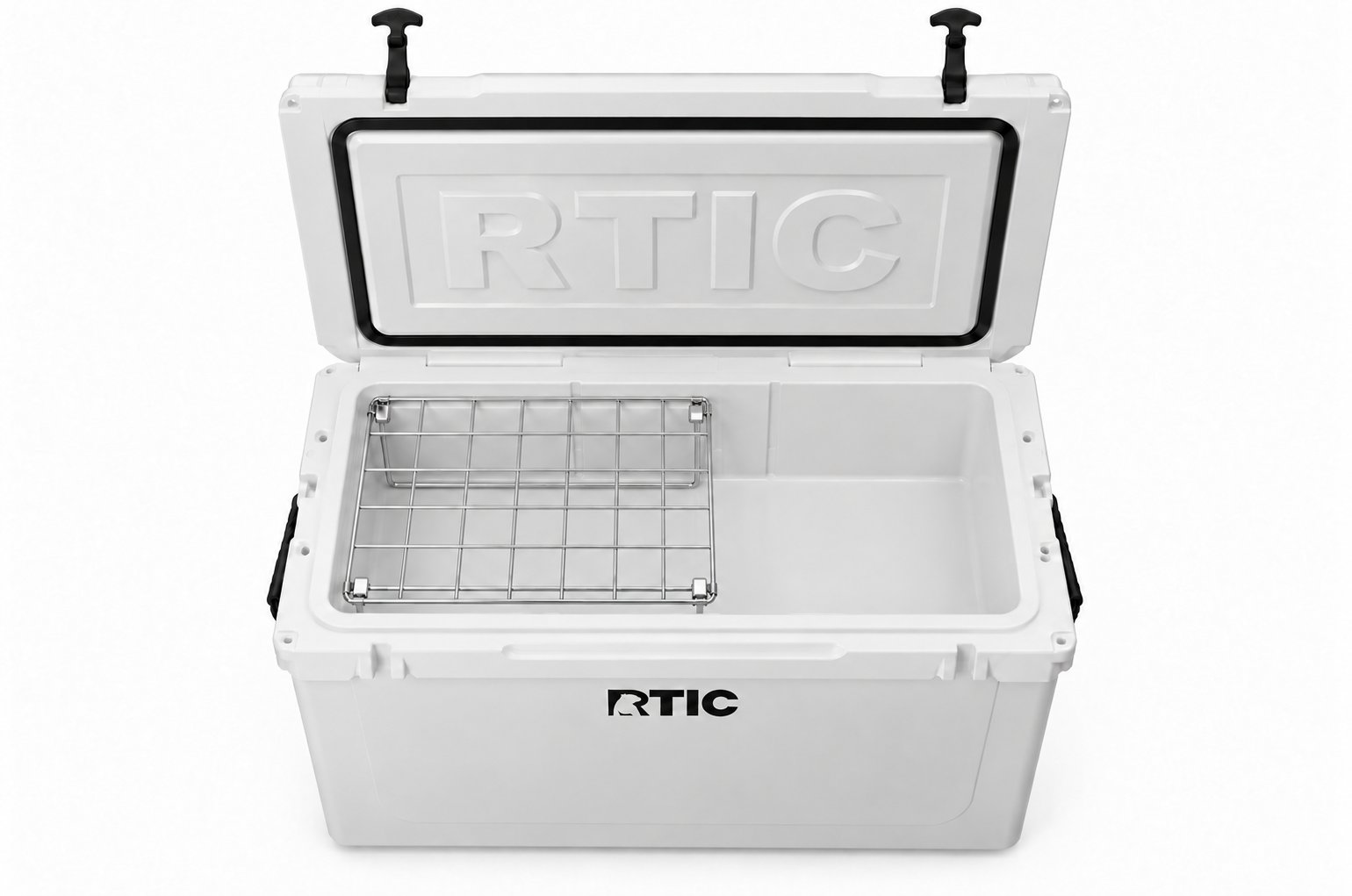
A cooler rack solves this by holding food above the water line while leaving room for drinks and ice underneath. Cooler Racks™ makes folding 304 food-grade stainless steel racks built for this job, with a 7-inch elevation and a 2 x 2-inch grid that lets loose ice pass through. Stainless steel is a common material for marine use because it resists rust.
Types of Cooler Rack Systems for Boat Decks
Cooler rack systems fall into two broad groups on a boat: those that sit freely inside the cooler, and those that mount to the boat itself. The first group is the most common and the easiest to try. The second suits owners who want a permanent setup on the deck.
For most boat owners, a freestanding rack inside a hard-sided cooler is the starting point. It travels with the cooler, needs no tools, and folds flat for storage. A mounted system makes sense when the cooler stays in one place and access matters more than portability.
Deck-Mounted Sliding Rails and Cooler Slides
Deck-mounted sliding rails hold a cooler on a track so it can be pulled out for access and pushed back for security. These systems are useful in tight spaces where opening a cooler lid is awkward. The main limitation is installation: the rails must be fixed to a solid deck section and sized to the cooler's width.
Pontoon Rail-Mounted Storage Racks
Pontoon owners often mount storage to the rail. A rail-mounted rack keeps the cooler off the deck and within easy reach of seating. It works best for lighter coolers, since the rail must carry the load while the boat moves.
Boat Cooler Mounting Kit Options and Installation
A boat cooler mounting kit usually includes some combination of straps, brackets, rail clamps, or tie-down points. The right kit depends less on the cooler brand than on what the deck or rail is made of and whether you are willing to drill.
The main installation paths break down like this:
- Strap or ratchet tie-down kits. These need no drilling if you can anchor to an existing cleat, rail, or eye. Stainless or coated steel hardware is the minimum for saltwater use, and webbing should be UV-rated.
- Rail-clamp or bracket kits. These clamp to a pontoon rail or gunwale without penetrating the deck. Check the rail diameter the clamp is rated for, because a mismatch is the most common reason these kits fail to hold.
- Through-bolted deck mounts. These give the most secure hold but require drilling. They are best suited to a fiberglass or aluminum deck with a solid backing structure beneath the mount point.
For drilled installs, a typical sequence is to mark the mounting points, confirm there is backing structure behind them (a wood or composite block, or a backing plate, is common on fiberglass), drill pilot holes, and bed the fasteners in marine sealant before tightening. Stainless fasteners are the usual choice; plated steel tends to corrode in saltwater and can stain the surrounding deck.
Tools needed for most drilled installs are a drill with a set of bits, a socket set, a driver, marine sealant, and a torque wrench if the kit specifies torque values. A rail-clamp or strap install usually needs only a wrench and a driver. Expect a drilled install to take a few hours including planning and sealing, and a clamp-based install to take well under an hour.
Watch out: drilling into a deck without confirming backing structure is the most common installation mistake, and it can crack gelcoat or pull a fastener out under load.
Aluminum Cooler Rack for Boat vs. Stainless Steel
Aluminum racks are lighter and usually cheaper, which appeals to owners who move gear often. The trade-off is durability. In a saltwater environment, aluminum can corrode, especially where it contacts dissimilar metals. Stainless steel resists rust.
For a rack that stays in the cooler season after season, stainless steel is the better choice. For a light, occasional-use setup on a freshwater lake, aluminum can work well.
Mounting a YETI Cooler Mount for Boat Use
YETI coolers are popular on boats, and owners often ask about mounting them.
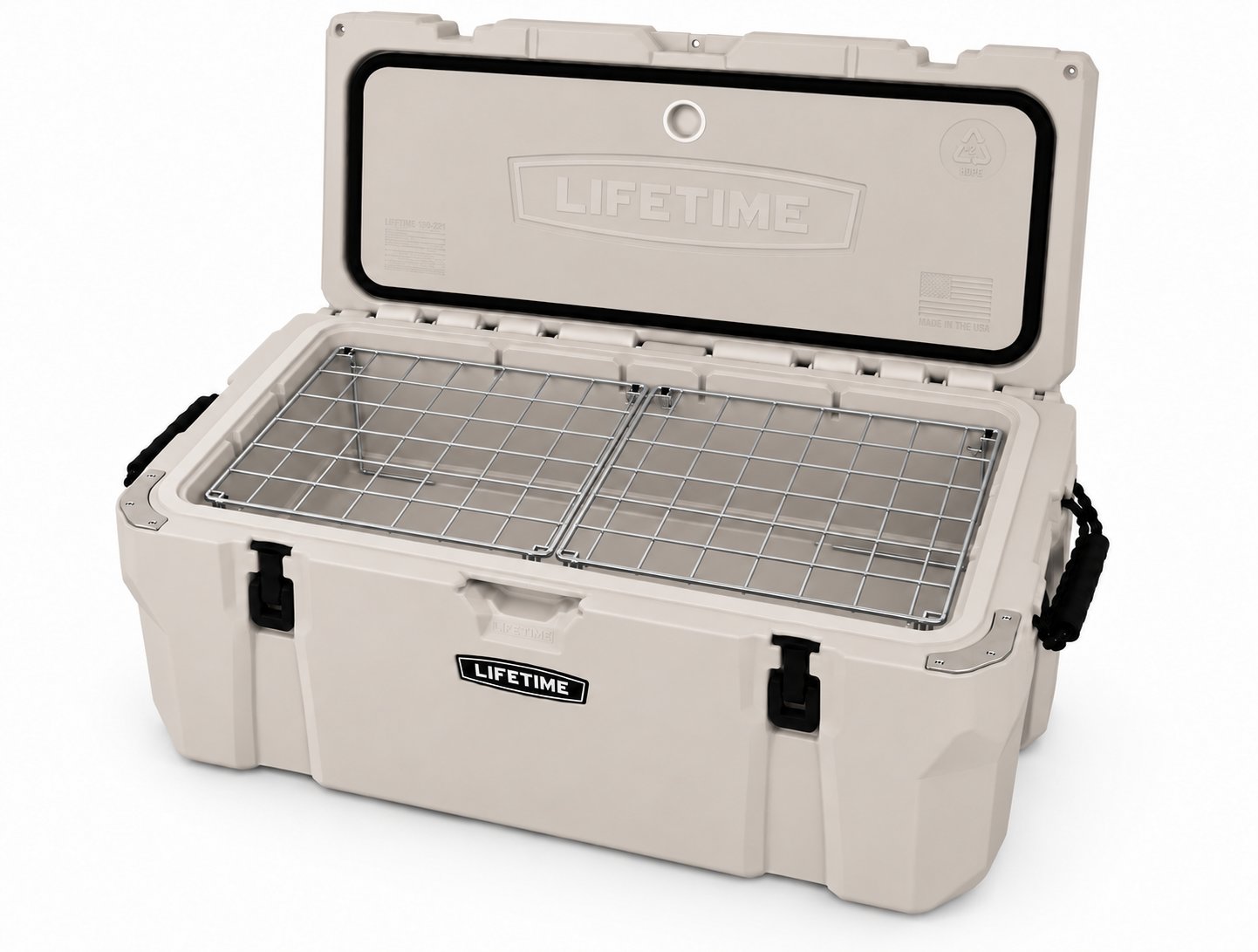
Whatever cooler you use, the principle is the same: secure it so it cannot slide, and keep the food rack inside so the contents stay dry.
Pontoon Boat Cooler Rack Setups
A pontoon boat gives you wide, open deck space but limited hard surfaces to mount to.
Pair the rack with a cooler that fits the deck layout.
Keeping Your Cooler Secure Underway and Fit Checks
Before heading out, check three things. First, confirm the cooler is secured with straps or a mount so it cannot slide when the boat turns or hits a wave. Second, check that the rack fits inside the cooler. Your cooler needs at least the rack's length and width in usable interior space, plus 7 inches of height for the rack and food. Third, measure the deck space where the cooler will sit.
Fit matters more than cooler capacity. Choose by the usable interior measurements, not the cooler's advertised size or brand.
Choosing Your Cooler Rack for Your Boat Deck
Most cooler rack buying decisions come down to one measurement: the usable interior length and width of the cooler you already own. Start there, then choose by how much food you carry and whether you need one level or two.
The comparison below is organized by the cooler's interior length.
| Cooler interior length | Option | Rack configuration | Rack footprint (L x W x H) | Price (USD) |
|---|---|---|---|---|
| About 10 inches | Compact Cooler Rack | One compact rack | 10 x 11 x 7 in | $29.99 |
| About 15 inches | Full Cooler Rack | One full rack | 15 x 11 x 7 in | $34.99 |
| About 20 inches | Double Cooler Rack Setup | Two compact racks | 10 x 11 x 7 in each | $54.99 |
| About 25 inches | Full Cooler System | One compact plus one full rack | Mixed | $59.99 |
| About 30 inches | Maximum Coverage System | Two full racks | 15 x 11 x 7 in each | $64.99 |
Confirm against the exact interior measurements on the product listing before ordering.
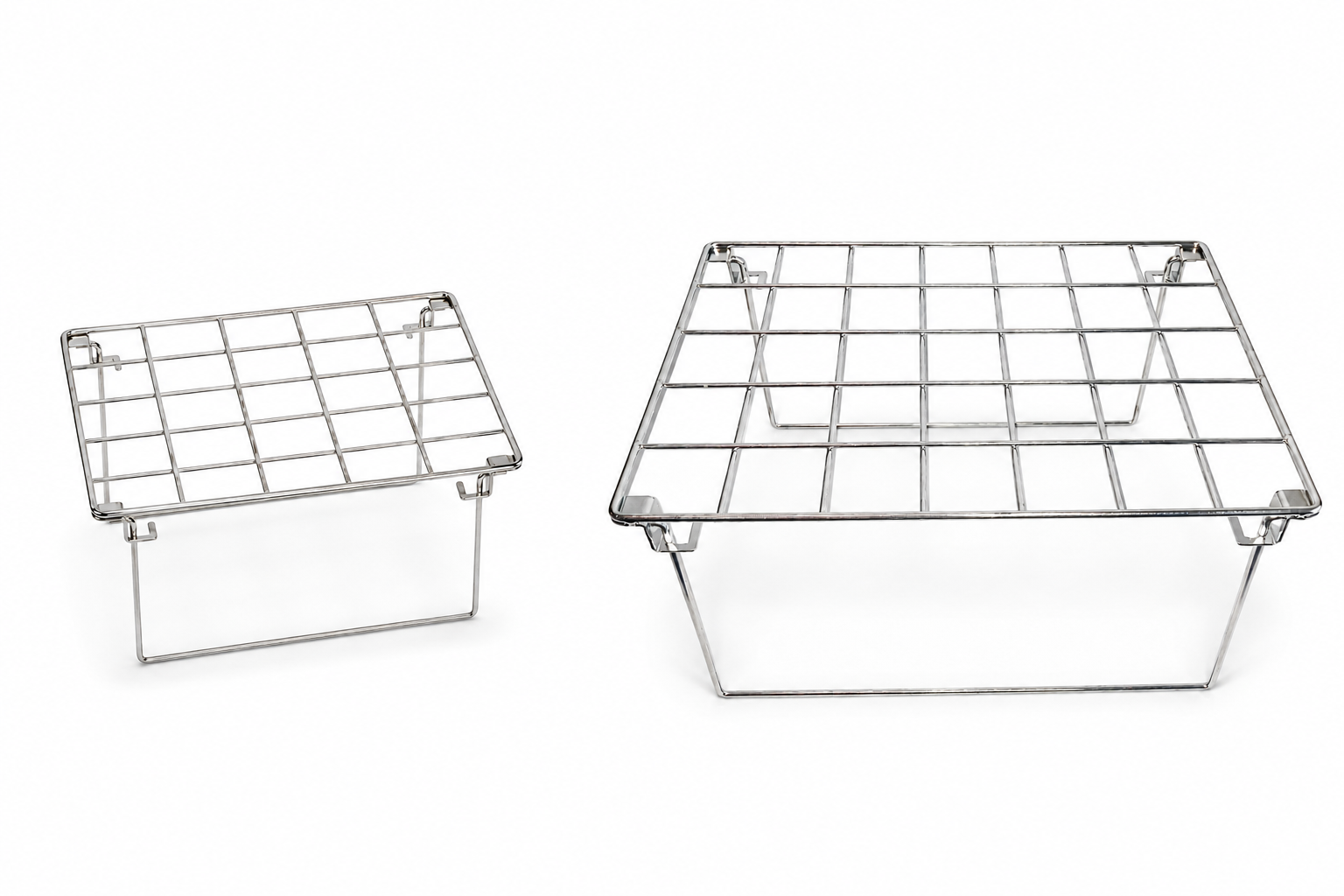
When the comparison is about how you will use the rack, the trade-offs are straightforward. A single rack is easier to reach into and lighter to lift in and out of a cooler. Two levels separate drinks or snacks from meals.
Standard shipping is $10.
The 25-inch Full Cooler System at $59.99 provides two elevated food-storage areas, one compact and one full-size rack. If your cooler is smaller or you only pack for a day trip, a single Compact or Full Cooler Rack is the better value.
Frequently Asked Questions
What is the best cooler rack system for a boat deck?
The best choice depends on your cooler's interior size and how the rack will be mounted. Cooler Racks™ offers the CR-SS-15 Full Size Cooler Rack at $34.99 and the CR-SS-10 Compact Cooler Rack at $29.99, both made from premium 304 stainless steel. Measure your cooler's usable interior before ordering, since the rack must fit inside your cooler, and then choose the size that matches your food and ice needs.
Can you mount a YETI cooler on a boat?
Yes, a YETI cooler can be secured on a boat using tie-down straps, a sliding rail system, or a mounting kit that matches your deck or pontoon rail. The cooler's footprint and weight determine which hardware will hold it steady underway. Cooler Racks™ products sit inside the cooler. Check that any hardware you buy is rated for marine use and anchors into solid structure.
Are aluminum or stainless steel cooler racks better for boats?
Stainless steel resists rust. Cooler Racks™ uses premium 304 stainless steel, which is rust-resistant, food-safe, and dishwasher-safe. Rinse any rack after use and dry it fully before storage to extend its life regardless of material.
How do you keep a cooler from sliding on a boat?
Secure the cooler to a fixed point on the deck or pontoon rail using straps, a sliding rail kit, or a mounting bracket, then confirm it cannot shift when the boat turns or hits a wake. A rack inside the cooler helps organize contents but does not prevent movement of the cooler itself. Pair the cooler's exterior restraint with a rack that keeps food elevated above loose ice so items stay in place.
Price of cooler rack options (USD)
