

Is a Cooler Rack Worth It? A Practical Review
Table of Contents
- What a Cooler Rack Does and How It Works
- How to Keep Food Dry in a Cooler Without Extra Gear
- Cooler Rack vs. No Rack: What the Difference Actually Is
- Cost, Storage, and Lifespan: The Real Value Proposition
- Cooler Rack Size Guide: Choosing the Right Fit
- Cooler Rack Review: Performance Across Different Trip Types
- When You Don't Need a Cooler Rack (And What to Use Instead)
- Conclusion: Is It Worth Buying?
- Frequently Asked Questions
Last Updated: October 10, 2026
What a Cooler Rack Does and How It Works
A cooler rack elevates food above ice and melted water inside a hard-sided cooler. This flat grid platform with folding legs creates a second storage level, allowing ice and cold water to drain beneath while keeping food dry on top.
Without elevation, food sits directly on ice or in pooling meltwater, leaving bread soggy and produce mushy. A cooler rack solves this by creating separation. Cooler Racks™ are made from 304 food-grade stainless steel with a 2 x 2-inch grid pattern that resists rust, allows ice to drain, and supports standard food containers.

Our racks provide 7 inches of clearance to keep food above the water line while leaving room for drinks and ice underneath. Folding legs collapse for compact storage.
How to Keep Food Dry in a Cooler Without Extra Gear
If you don't have a cooler rack, several methods can reduce moisture damage, but each has trade-offs that matter in practice.
Sealed containers and resealable bags prevent direct contact between food and meltwater. The limitation: they consume roughly 40% more volume than food on a rack, losing 15-20 quarts of usable space in a 50-quart cooler. They also require pre-packing, preventing mid-trip reorganization.
Block ice with a moisture barrier (newspaper, cardboard, or towel) slows meltwater accumulation by 30-50%. The trade-off: this method is reactive, not preventive. The barrier saturates within 8 hours and requires manual monitoring. Food still sits on or near ice.
Makeshift platforms (cutting board or plywood) cost nothing but don't drain meltwater, warp over time, block airflow, and require manual moisture management. Most users find this frustrating after one trip.
Loose ice alone requires constant vigilance. Food sits in meltwater within 2-4 hours, and digging through ice accelerates melt. This works only for trips under 3 hours.
All substitutes require active management and accept moisture exposure. A cooler rack eliminates the problem passively. For casual users (3-4 trips yearly), substitutes suffice. For regular users or mixed food/drink trips, the convenience gap becomes noticeable immediately.
Cooler Rack vs. No Rack: What the Difference Actually Is
The practical difference comes down to three things: dryness, organization, and convenience.
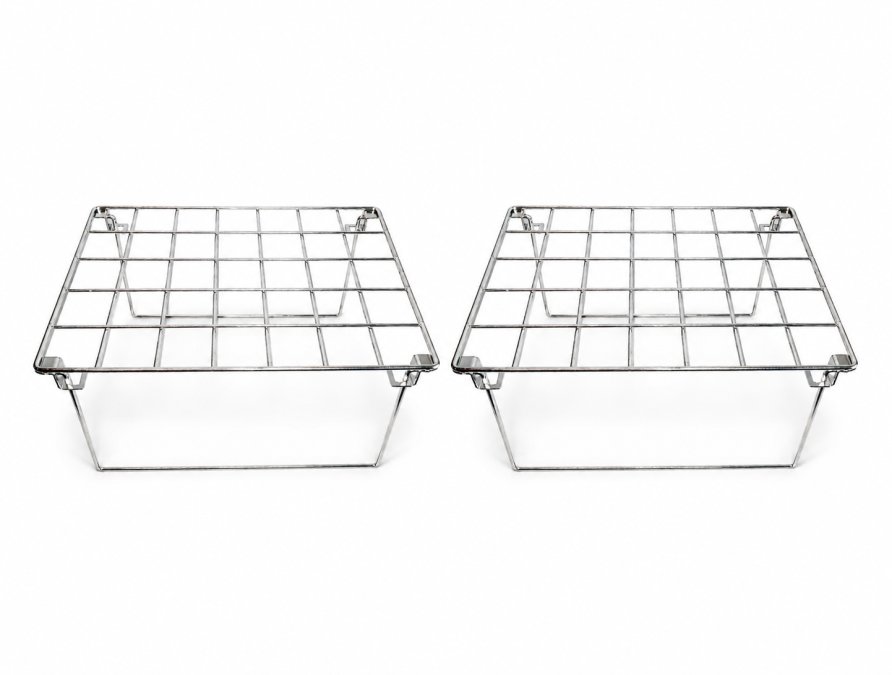
With a cooler rack, food stays completely dry and elevated above meltwater. Tim from Tucson reported: "No more soggy sandwiches. My food stays dry, my drinks stay cold."
A rack creates a defined food level for easy access. Oliver from Cary, North Carolina said: "My cooler is organized like a fridge. Worth every penny."
Convenience follows: no time wasted searching, no mid-trip repacking, and your cooler functions like a small refrigerator.
Cooling performance remains unchanged; ice cools drinks below the rack equally well. What improves is usability for mixed food and beverage trips.
Cost, Storage, and Lifespan: The Real Value Proposition
A single Cooler Racks™ rack costs $32.99. The Double Cooler Rack Setup ($57.99) provides 20 inches of coverage, and the Full Cooler System ($60.99) includes both compact and full-size racks. These are one-time purchases.

Compare that to the cost of replacing soggy food, wasting groceries, and dealing with the frustration of disorganized coolers over multiple trips. Ruined food on even two trips pays for a rack.
Storage is simple. The folding legs collapse flat, so the rack takes up minimal space in a garage or truck bed. Stainless steel doesn't require special care, just rinse it off and let it dry, or throw it in the dishwasher. No coating to chip. No plastic to crack. A quality stainless steel rack lasts for years with zero maintenance.
Lifespan is where the value becomes clearest. A well-made cooler rack from 304 stainless steel should last a decade or more if you're using it regularly. You're not replacing it every season. You're buying it once and using it for hundreds of trips.
Cooler Rack Size Guide: Choosing the Right Fit
Choosing the right cooler rack size starts with measuring your cooler's interior. You need three measurements: interior length, interior width, and usable interior height.
The CR-SS-15 Full Size Cooler Rack fits coolers with at least 15 inches of interior length and 11 inches of width. It's the most popular single rack because it covers enough space for typical family outings without being oversized.
The CR-SS-10 Compact Cooler Rack is 10 inches long and works for smaller coolers or as a secondary rack in larger ones. Use this if your cooler is smaller or if you want to combine two racks for full-length coverage.
For larger coolers, combining racks makes sense. The Double Cooler Rack Setup gives you 20 inches of coverage using two compact racks. The Full Cooler System pairs a compact and full-size rack for 25 inches of coverage. The Maximum Coverage System uses two full-size racks for 30 inches.
The decision framework is straightforward: measure your cooler, identify which racks fit, then choose based on how much food-storage space you actually need. If you're mostly storing drinks below and a few food items above, a single full-size rack handles it.
CR-SS-15 Full Size Cooler Rack (15″) →
Cooler Rack Review: Performance Across Different Trip Types
Performance varies depending on how you're using the cooler. For day trips and beach outings, a single cooler rack handles most needs. The rack keeps everything organized and dry for that timeframe.
For multi-day camping trips, the cooler rack becomes more valuable. You're managing food for 2 to 5 days, and organization prevents you from digging through ice repeatedly. Kirah from Ann Arbor, Michigan found this crucial: "Finally! I used to dread opening my cooler mid-trip. Now everything is dry, organized, and easy to grab. Everyone in our camping group wants one too."
For fishing and boating trips, stainless steel is the key feature. Salt water and moisture are constant. A rack made from 304 stainless steel won't rust or corrode, even with repeated exposure to saltwater spray. This durability matters when you're on the water for extended periods.
For tailgating and large group events, multiple racks or a bundle system makes sense. You need to store food for 10 to 20 people, and a single rack won't provide enough organized space. The bundle options let you create a larger platform.
For overlanding and off-road trips, durability and space efficiency matter most. A stainless steel rack that doesn't bend or warp under heavy use is worth the investment.
When You Don't Need a Cooler Rack (And What to Use Instead)
Whether a cooler rack is worth buying depends on your usage pattern, household type, and tolerance for moisture management. Here's how to assess your situation:
Occasional users (1-2 trips per year): If you use a cooler fewer than three times annually, the investment may not justify itself. For these trips, sealed containers and block ice are adequate substitutes. The inconvenience of digging through ice or managing moisture barriers happens infrequently enough that it's not a pain point. However, if even one of those trips is a multi-day camping or road trip where food quality matters, a rack becomes more appealing because the frustration is concentrated into a single, memorable experience.
Frequent users (4+ trips per year): Regular cooler users, families who camp monthly, fish weekly, or take frequent road trips, notice the difference immediately.
Drinks-only coolers: If your cooler holds exclusively beverages and ice, a rack adds no value. Drinks don't suffer from moisture exposure, and organization isn't a concern. Skip the rack and use the space for more ice.
Soft-sided coolers: Cooler racks are designed for hard-sided coolers with rigid interiors. Soft coolers lack the structural support for a rack to sit level or drain effectively. For soft coolers, sealed containers remain your best option.
Small coolers (under 30 quarts): Compact coolers have limited interior space. A rack that elevates food may consume so much vertical space that you lose more usable volume than you gain in organization.
Short trips under 4 hours: On quick outings, a few hours at the beach, a yard gathering, a short day hike, food quality rarely deteriorates enough to justify the setup time.
Kitchen constraints (limited storage space): If your garage, truck bed, or storage closet is already packed, a cooler rack adds clutter. Even though a folding rack is compact, some households genuinely lack the space.
The practical substitutes and their limits:
- Sealed containers: Work well for organized packing but reduce cooler capacity by 15-20% and require pre-packing.
- Block ice with barriers: Slows meltwater but becomes saturated within 6-8 hours and requires manual monitoring.
- Newspaper or towel layers: Cost nothing but offer only temporary moisture absorption and don't prevent food from sitting in pooling water.
- Makeshift platforms (cutting boards, plywood): Free but unstable, block drainage, and often warp or absorb water.
The decision: A cooler rack is unnecessary only if you use a cooler rarely, exclusively for drinks, or on very short trips.
Conclusion: Is It Worth Buying?
Is a cooler rack worth it? For anyone who uses a hard-sided cooler more than three or four times a year, the answer is yes.
The value comes from three places: preventing soggy food, organizing your cooler like a refrigerator, and eliminating the frustration of digging through ice. A single Cooler Racks™ rack costs $32.99 and lasts a decade. That's roughly $3 per year for regular users. The convenience and food quality improvement pay for itself on the first trip.
Frequently Asked Questions
Does a cooler rack actually keep food dry?
Yes. A cooler rack elevates food 7 inches above ice and melted water, preventing direct contact. Food stays dry as long as it sits on the rack surface. The 2 x 2-inch grid pattern allows water and loose ice to pass underneath while keeping sandwiches, produce, and containers elevated. Effectiveness depends on how much ice melts during your trip and whether you keep food on the rack rather than mixing it with ice below.
What size cooler rack should I buy?
Measure your cooler's interior length, width, and usable height. The CR-SS-15 (15" x 11" x 7") fits coolers with at least 15" length; the CR-SS-10 (10" x 11" x 7") works for smaller spaces. For coolers 20-25" long, the Double Cooler Rack Setup or Full Cooler System (25") provides full coverage. The Full Cooler System is the most popular option for families and multi-day trips. Check the Size Guide on the product page to confirm compatibility with your specific cooler model.
Is a cooler rack worth it for short day trips?
For 1-2 day beach or picnic trips, a cooler rack provides noticeable value if soggy food bothers you. You'll see the benefit immediately: dry sandwiches, crisp produce, and organized access without digging through ice. If you pack carefully and don't mind occasional wet food, you may skip it. For families doing frequent beach outings or camping trips longer than one day, the cost ($33-64) pays for itself in food quality and convenience within 3-4 trips.
Can you use a cooler rack in a soft cooler?
No. Cooler Racks are designed for hard-sided coolers only. Soft coolers lack the rigid structure needed to support the rack's folding legs and distribute weight evenly. The elevated platform works because hard-sided coolers have a stable, flat bottom. For soft coolers, packing food in waterproof containers or bags is a better alternative.
What can I use instead of a cooler rack?
Common alternatives include waterproof containers stacked inside the cooler, or simply packing food in sealed bags above ice. These work for short trips but don't provide the same organization or reliable elevation. A cooler rack offers more durability and consistent performance.
If you're tired of opening your cooler to find soggy sandwiches and disorganized chaos, a cooler rack transforms the experience. Cooler Racks™ makes stainless steel racks that fit over 86 cooler models, provide 7 inches of elevation, and collapse flat for storage. Choose the CR-SS-15 Full Size Cooler Rack for standard coolers, or combine sizes for larger setups. Shop Cooler Racks at www.coolerracks.com and get organized, dry food on your next trip.