

YETI vs Igloo Cooler: Ice Retention, Price & Real-World Performance
Table of Contents
- YETI vs Igloo Cooler: Performance Breakdown
- YETI vs Igloo Ice Retention: Which Cooler Stays Coldest
- Durability and Construction: Rotomolded vs Thermoelectric Design
- YETI vs Igloo Price Comparison: What You Actually Pay
- YETI vs Igloo for Camping: Which Cooler Wins in the Field
- YETI vs Igloo for Boating: Salt Water, Durability, and Portability
- Which Cooler Should You Buy? Making the Right Choice
- Frequently Asked Questions
Last Updated: October 21, 2026
YETI vs Igloo Cooler: Performance Breakdown
Choosing between a YETI and Igloo cooler means choosing between two philosophies.
Both brands offer hard-sided coolers with rotomolded construction on their premium lines. The real differences emerge in wall thickness, gasket quality, build precision, and price.
YETI coolers typically hold ice longer in controlled testing; Igloo coolers offer better value at lower price points. Neither is objectively "better", it depends on whether ice retention or budget matters more.
YETI vs Igloo Ice Retention: Which Cooler Stays Coldest
Ice retention is where YETI vs Igloo cooler comparisons get most heated, and where most fall apart. "YETI keeps ice longer" is true at the brand level but nearly useless at the buying level, because the answer changes with the models, packing, and weather.
Compare like-for-like models, not brands
The only fair comparison is a similarly sized hard-sided cooler from each brand. YETI's Tundra line is rotomolded with thick polyurethane walls and a freezer-grade gasket; Igloo's rotomolded premium line (IMX and similar families) uses comparable construction, while Igloo's entry-level coolers are injection-molded with thinner walls and simpler lid seals. A 45-quart rotomolded Igloo and a Tundra 45 are a legitimate matchup; a rotomolded YETI against an injection-molded Igloo is not, and that mismatch fuels most "YETI lasts twice as long" claims online.
The test protocol that actually tells you something
A repeatable head-to-head test needs discipline, not a lab:
- Same starting conditions: chill both coolers to the same internal temperature and pre-chill the contents. A warm cooler eats its first bag of ice before it cools anything.
- Same ice-to-content ratio: use the same weight of ice per quart of capacity. A 2:1 ratio by weight is a reasonable multi-day benchmark; 1:1 is a day-trip load.
- Same ice form: block ice melts slower than cubed in every cooler, so use the same form in both. Packing matters as much as insulation.
- Same ambient conditions: run both coolers in the same spot, same shade or sun, and log the temperature range. A 70°F garage test is not comparable to a 95°F truck bed.
- Same opening schedule: decide up front how often you open each lid (say, twice a day for 30 seconds) and stick to it. Opening frequency is one of the largest real-world variables.
- Measure melt, not vibes: drain and weigh meltwater at fixed intervals, or track internal temperature with a probe. "Still had ice on day five" is an anecdote; "drained 4.2 pounds of meltwater by hour 72" is data.
What the construction difference actually does
YETI's rotomolded polyurethane walls are thick and seamless, and the lid gasket seats tightly, slowing conductive heat gain and air exchange. Igloo's rotomolded premium models narrow the gap substantially; between a Tundra and a same-size rotomolded Igloo, the difference is hours to a day in typical conditions, not weeks. The large, reliable gap is between either rotomolded cooler and an injection-molded budget Igloo, where thinner walls and a simpler lid seal let heat in and cold air escape.
How trip length and conditions change the answer
- Day trips (under 24 hours): both brands keep food and drinks cold if you pre-chill and use enough ice. Packing discipline, not brand, decides.
- Weekend trips (2-3 days): a rotomolded cooler from either brand holds up well. If you open the lid often or camp in full sun, the YETI's tighter lid seal and thicker walls buy margin.
- Multi-day and week-plus trips (5+ days): this is where YETI's insulation edge compounds. If you cannot resupply ice, the extra retention is the whole point of the premium.
- Heat and sun: a cooler in direct 95°F sun loses ice far faster than the same cooler in shade, regardless of brand. Shade, a reflective cover, and pre-chilling matter more than the logo.
- Opening frequency: a cooler opened ten times a day behaves like a much smaller, much worse cooler. If your group grazes all day, plan for more ice or a better-sealing lid.
The practical takeaway
For day trips or weekend outings, both brands keep things cold enough, and a well-packed Igloo rotomolded cooler will match a poorly packed YETI. For extended backcountry trips where resupplying ice is not an option, YETI's insulation and lid seal justify the premium.
Durability and Construction: Rotomolded vs Thermoelectric Design
Igloo's approach varies by model: premium rotomolded coolers match YETI's construction quality, while budget models use injection-molded plastic that is lighter but more prone to cracking under stress or extreme temperature swings.
The durability difference matters most if you throw your cooler in truck beds, drag it across rocky terrain, or use it in extreme conditions. YETI handles abuse better.
Hinges, latches, and drain plugs matter too. YETI uses corrosion-resistant stainless steel hardware; Igloo's premium models include quality hardware, while its budget models use plastic that can break or wear out.
YETI vs Igloo Price Comparison: What You Actually Pay
Most articles stop at "YETI costs more", true, but not useful. The real question is what you pay upfront, what you pay over the cooler's life, and which number actually changes your decision.
Upfront price: the sticker gap
YETI hard-sided coolers sit in the premium tier. A Tundra 45 typically runs in the low-to-mid $300s at major retailers, with larger Tundras climbing into the $400s and beyond. Igloo's rotomolded premium coolers of similar capacity often land in the $150-$250 range, while Igloo's injection-molded entry-level coolers commonly sell under $100 and frequently under $60 for smaller sizes. Prices move with sales, but the tier structure is stable: YETI is roughly two to three times the price of a comparable-capacity rotomolded Igloo, and several times an entry-level Igloo.
Warranty and replacement parts
YETI backs its hard-sided coolers with a limited five-year warranty and sells replacement lids, gaskets, latches, and drain plugs through its own parts channel, so a worn gasket or broken latch is a cheap fix rather than a reason to replace a $300 cooler. Igloo's warranty coverage varies by product line, and replacement-part availability is less consistent, so check the specific model's terms before you buy.
Total cost of ownership: the ice bill
Ice is the cost nobody puts in the comparison table. A 10-pound bag runs a few dollars, and a weekend trip can consume two or three bags. Over a season, ice can cost more than the difference between a budget cooler and a premium one, and a cooler that holds ice a day or two longer per trip cuts bags per trip. The flip side: if you take two trips a year, ice savings will never repay a $200 premium, and the cheaper cooler wins on total cost.
Expected lifespan and annualized cost
A rotomolded cooler from either brand, cared for and kept out of prolonged direct sun, commonly lasts a decade or more; thin injection-molded walls degrade faster. Spread the price across expected years and the gap narrows: a $350 cooler over 10 years is about $35 per year, while a $60 cooler replaced every three years is about $20 per year, before counting the extra ice the cheaper cooler consumes.
Where the value actually lands
For budget-conscious buyers, Igloo's entry-level hard-sided coolers cost a fraction of YETI, and for casual day trips the trade-off makes sense: more frequent ice runs and a shorter service life for a much lower upfront cost.
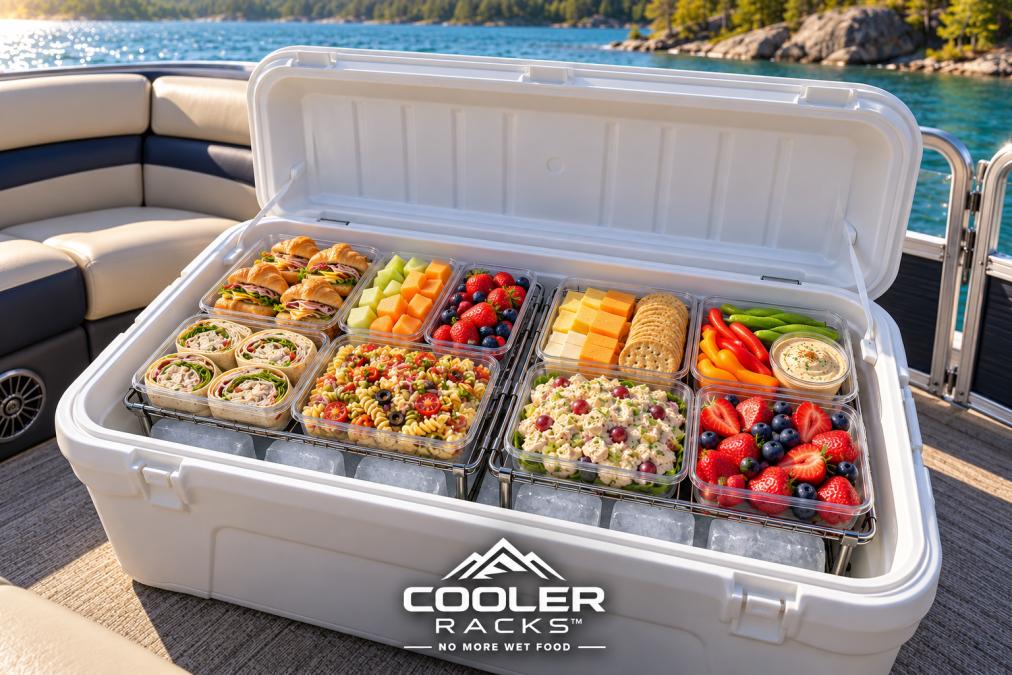
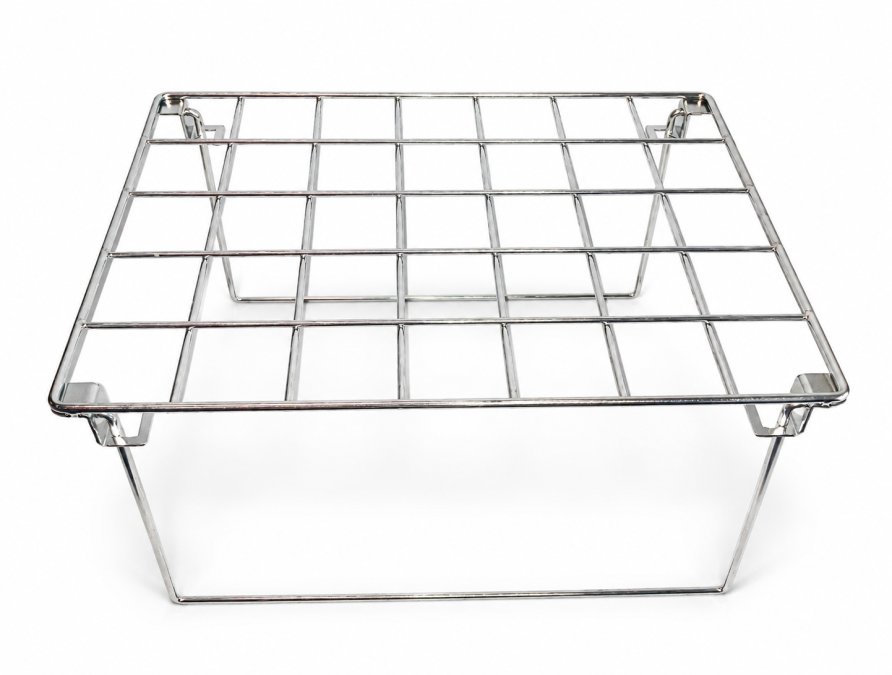
Whichever you choose, budget for accessories that change the ownership experience: a cooler rack or basket keeps food out of meltwater, meaning less soggy food and a cooler that stays usable trip after trip.
YETI hard cooler warranty and replacement parts
YETI vs Igloo for Camping: Which Cooler Wins in the Field
On camping trips, YETI vs Igloo cooler performance differences become apparent after day two. YETI's superior ice retention means you're not scrambling for fresh ice mid-trip.
Portability shifts the equation. YETI coolers tend to be heavier due to thicker walls, while Igloo's lighter models are easier to carry into remote campsites.
Campsite practicality favors organized coolers. Whether you use YETI or Igloo, grabbing what you need without digging through ice matters on every trip.
For car camping and established campsites, either brand works well.
YETI vs Igloo for Boating: Salt Water, Durability, and Portability
Boating introduces salt water, UV exposure, and constant moisture, conditions that separate durable coolers from those that degrade quickly.
That said, Igloo's premium rotomolded coolers with quality hardware perform acceptably in marine environments. They're not as corrosion-resistant as YETI, but they survive boating use without falling apart.
For serious saltwater fishing trips with the cooler on the boat all season, YETI's corrosion resistance and superior construction justify the premium.
Which Cooler Should You Buy? Making the Right Choice
Your decision between YETI vs Igloo cooler depends on three honest questions: How long are your typical trips? How much ice retention do you actually need?
For week-long expeditions or situations where keeping ice for 7+ days matters, YETI's superior insulation and construction justify the premium.
For budget-conscious buyers doing occasional camping or boating, Igloo's entry-level hard-sided coolers work fine.
Consider your actual use pattern, not hypothetical scenarios.
One practical addition regardless of brand: a cooler organization system keeps food dry and accessible, transforming either cooler into something closer to a mobile refrigerator than a basic ice chest.
Choosing between YETI and Igloo coolers comes down to matching capabilities to your actual needs rather than paying for features you won't use.
Frequently Asked Questions
Do YETI coolers keep ice longer than Igloo coolers?
YETI coolers with rotomolded construction and thicker wall insulation typically hold ice 2-3 days longer than standard Igloo plastic coolers in similar conditions. However, high-end Igloo models with improved insulation close the gap. Ice retention depends on cooler capacity, wall thickness, ambient temperature, and how often you open the lid. YETI's design prioritizes extreme durability alongside cooling performance, which justifies the price premium for extended trips.
Are YETI coolers worth the extra cost over Igloo?
YETI coolers cost 2-3 times more than basic Igloo models, but offer superior ice retention, impact resistance, and warranty coverage. For day trips and casual use, a mid-range Igloo cooler performs adequately. For multi-day camping, boating, or overlanding where food safety and durability matter, YETI's premium construction justifies the investment. Consider total cost of ownership: a YETI lasts 10+ years, while cheaper coolers may need replacement every 3-5 years.
Which cooler is better for boating, YETI or Igloo?
YETI coolers are better for boating because rotomolded construction resists salt water corrosion, UV damage, and impact from waves and deck equipment. YETI's rubber gasket seals also prevent water infiltration during rough conditions. Standard Igloo coolers can work for casual boating but may degrade faster in salt environments. If you boat frequently or in harsh conditions, YETI's durability and corrosion resistance provide better long-term value.
What's the best cooler for camping trips?
For camping, choose based on trip length and conditions. YETI works best for multi-day backcountry trips where durability and ice retention matter most. Igloo coolers suit shorter camping trips (1-2 days) and car camping where weight is less critical. Consider your cooler's capacity (quart size), portability (weight and handles), and whether you need wheels. Pair either cooler with a stainless steel rack to keep food dry and organized, this prevents soggy food.