

How to Choose a 30 Inch Cooler Rack System
Last Updated: November 2, 2026
Quick Summary
A 30 inch cooler rack lifts food above melting ice and meltwater, keeping sandwiches and packaged items dry while drinks and ice stay below. Two racks in a 30 inch system give you a second layer of shelf space, which helps on long coolers and multi-day trips.
- Measure the cooler's inside, not the outside, before buying any rack.
- Confirm at least 11 inches of interior width at the narrowest point.
- A 30 inch system only fits coolers that are long enough for two racks.
- Pack food on the rack, with ice and drinks below it.
Table of Contents
- What a 30 Inch Cooler Rack System Actually Gives You
- Cooler Rack Size Guide: Measuring Your Cooler Before You Buy
- Stainless Steel, Load Capacity and Weight Distribution
- Cooler Organizer Rack Setup: Packing Food Above Ice and Drinks Below
- Trade-Offs: When a 30 Inch System Is Overkill
- Choosing the Right Setup for Your Next Trip
- Frequently Asked Questions
Most people pack a cooler the same way: sandwiches on top, drinks at the bottom, and a bag of ice dumped over everything. By the second day, the ice has melted, the water has nowhere to go, and the bread is sitting in it. Lifting food above the meltwater while the drinks and ice stay underneath solves this. Cooler Racks™ builds its racks around this exact problem.
The cause is simple physics. Cold ice melts, and the water sinks to the lowest point of the cooler. Food packed in that water absorbs it, and packaging tears. USDA guidance on keeping food cold during transport explains why keeping perishables at safe temperatures matters for food quality.
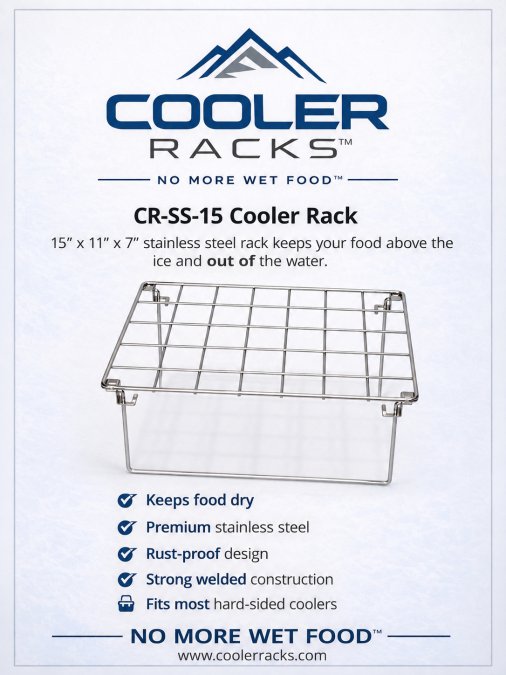
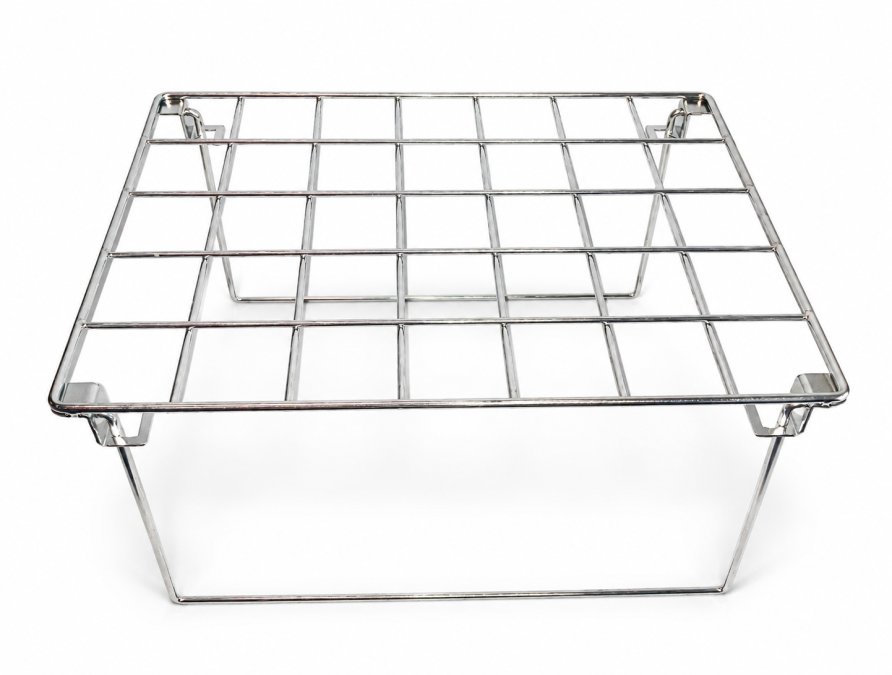
Here is the core idea: a rack creates a second layer. Food sits on the rack, ice and drinks sit below, and meltwater drains past the grid. Our racks add 7 inches of elevation with a 2 x 2-inch grid that lets loose ice pass through.
What a 30 Inch Cooler Rack System Actually Gives You
A 30-inch system pairs two racks to cover a long cooler. Two racks give you more usable shelf space.
Watch out: a 30-inch system only works if your cooler's interior length matches. Buying two racks for a short cooler wastes money.
Cooler Rack Size Guide: Measuring Your Cooler Before You Buy
Measure the inside of your cooler, not the outside. For a full check against specific cooler models, see our compatibility guide for checking rack dimensions. The right rack size depends on usable interior dimensions, not the cooler's brand or capacity rating.
The Measuring Checklist
Work through these in order and write each number down:
- Interior width: At least 11 inches across the narrowest point. Tapered cooler walls can narrow toward the floor, so measure low.
- Usable height above the floor: At least 7 inches of clearance for the rack's elevation, plus room for the food layer above it. Measure from the floor to the underside of the lid, not to the top of the lid.
- Lid and gasket intrusion: Lids often have lips, gaskets, or molded cup holders that hang down into the interior. Close the lid on your tape measure or a straightedge to see how much usable height you actually lose.
- Handle and hinge clearance: Check that the rack does not block drain plugs, hinges, or the path of the lid as it opens. A rack that fits but traps the drain plug is a rack you will remove every trip.
The Fit Test Before You Commit
A tape measure gets you close; a fit test gets you certain. Before loading a cooler for a trip:
- Set the rack (or racks) in the empty, dry cooler.
- Confirm the rack sits flat with no rocking on the floor.
- Close the lid slowly and watch for contact with food-height items on the rack.
- Open and close the lid through its full arc to check hinge and handle clearance.
- Reach for the drain plug with the rack in place.
If any step fails, you need a smaller rack, a different arrangement, or a different cooler.
Compatibility Checklist: Shape, Handles, Tie-Downs and Accessories
Dimensions are necessary but not sufficient. Run this checklist against your specific cooler:
- Cooler shape: Rectangular hard-sided coolers are the straightforward fit. Coolers with rounded or tapered interiors may not seat a rectangular rack securely.
- Lid opening: A rack raises your food layer, so confirm the lid still closes over sealed containers without crushing them.
- Handles: Molded or folding handles can intrude into the interior on some models. Check that the rack clears them.
- Tie-downs and mounting surface: If the cooler rides in a truck bed or on a boat deck, confirm the rack stays put when the cooler is strapped down and the vehicle is moving.
- Accessory clearance: Basket hangers, divider slots, and built-in cutting boards can conflict with a rack footprint. Test with your actual accessories installed.
Does a Soft-Sided Cooler Work?
Our racks are designed for hard-sided coolers only. You can read our dedicated answer on whether racks work in soft-sided coolers. Soft-sided coolers usually lack the rigid walls and stable floor the racks need. If your cooler is soft-sided, a rack may not sit securely or fit at all, and an unstable rack defeats the purpose of keeping food dry and organized.
Maximum Coverage Cooler Rack System (30″) →
Stainless Steel, Load Capacity and Weight Distribution
Our racks use 304 food-grade stainless steel. They are rust-resistant, easy to clean, and dishwasher-safe.
Cooler Organizer Rack Setup: Packing Food Above Ice and Drinks Below
Start with the cooler empty and dry. Place the rack in, then add a layer of ice or block ice to the bottom. Pack food on the rack, and fill the space below with drinks and remaining ice. This is the same approach that helps people learn how to keep food dry in a cooler without relying on plastic bags alone.
Here is a simple setup order:
- Clean and dry the cooler.
- Set the rack at the correct height.
- Add ice or block ice below the rack.
- Place sealed food on the rack.
- Add drinks below, filling around the ice.
Trade-Offs: When a 30 Inch System Is Overkill
A 30-inch system is not right for everyone, and the honest way to decide is to compare it directly with the alternatives. The question is not whether two racks are better than one, it is whether your cooler, your trips, and your packing style actually use the extra shelf space.
30-Inch System vs. Smaller and Larger Options
| Option | Best for | Access | Storage and clearance | Portability |
|---|---|---|---|---|
| Single 15-inch rack | Small coolers, day trips, one or two people | Easy, one layer, quick reach | Stores flat; minimal clearance needed | Lightest; easy to move between coolers |
| 30-inch system (two racks) | Long coolers, multi-day trips, groups, tailgates, fishing outings | Two distinct zones, reach snacks without unpacking meals | Needs a cooler at least 30 inches long and 11 inches wide; two pieces to store | Heavier and bulkier; best left in one dedicated cooler |
| Larger or multi-rack arrangements | Very large coolers, basecamp and event use | Maximum separation of food, drinks, and ice | Demands the most interior length and height; most storage space when out of the cooler | Least portable; effectively a permanent cooler fixture |
The Real Trade-Offs of Going to 30 Inches
- Access: Two racks let you separate snacks from meals and reach one layer without unpacking the other. On a short cooler, a second rack adds a layer you cannot comfortably reach past.
- Storage and clearance: Two racks take more room in the garage or truck between trips, and they demand more usable interior height. If your cooler is tight on clearance, one rack leaves more room for food.
- Portability: A 30-inch system is best treated as a dedicated setup for one large cooler. If you rotate between several coolers, a single 15-inch rack moves more easily.
- Cost per use: Two racks cost more than one. The extra spend pays off only if you regularly pack for groups or multi-day trips where the second shelf gets used.
- Clutter risk: Buying a 30-inch system for a cooler that is only 15 inches long creates no benefit and adds clutter. Match the system to the cooler, not to the trip you might take someday.
When 30 Inches Is the Right Call
A 30-inch system makes the most sense when three things are true: your cooler's interior is at least 30 inches long and 11 inches wide, you routinely pack for a group or multiple days, and you want food and drinks separated into distinct zones. Tailgates, fishing outings, and multi-day camping trips are the classic fits. Short day trips with a small cooler are the classic mismatch.
If you are on the fence, start with a single 15-inch rack in your cooler. Our side-by-side comparison of one rack versus two sizes can help settle the choice. If you find yourself wishing for a second shelf, because snacks and meals keep colliding, or because you are packing for more people, that is your signal to step up to the 30-inch system.
Choosing the Right Setup for Your Next Trip
Measure your cooler's interior first, then choose the rack size that fits. If your cooler is long enough for two racks and you pack for a group or multi-day trip, a 30-inch system gives you the most organized space.
Our PRODUCT: Maximum Coverage Cooler Rack System (30″) is the full 30-inch option, and the CR-SS-15 Full Size Cooler Rack (15″) suits smaller coolers. Check the size guide before ordering.


Frequently Asked Questions
Will a 30 inch cooler rack fit inside my cooler?
It depends on the interior, not the outside dimensions or the brand name. For a 30 inch system built from two full-size racks, the cooler needs at least 30 inches of interior length, 11 inches of interior width and 7 inches of usable interior height. Measure inside the lid-to-base depth and between the walls, subtract any lip or hinge intrusion, and check the size guide for compatible models before ordering. The Maximum Coverage bundle is designed for that end-to-end arrangement.
Does a cooler rack system work in a soft-sided cooler?
The Cooler Racks system is designed for hard-sided coolers. If most of your trips use a soft cooler, check the listing details before buying and consider a hard-sided cooler for the setup described here.
How do I keep food dry in a cooler without a rack?
Freeze water bottles or block ice so it melts slowly, drain meltwater regularly, and pack food in sealed containers or zip bags. A rack adds a second layer: food sits on the elevated grid while loose ice and meltwater pass beneath it. Pair the rack with block ice and keep drinks in the lower compartment for the cleanest separation.
Which rack size should I buy for a cooler organizer?
Start with the usable interior length. A single CR-SS-15 full-size rack, at 15 inches by 11 inches by 7 inches, suits a shorter cooler or one section of a larger one. A 30 inch system uses two full-size racks to cover a longer cooler end to end. The 25 inch bundle pairs a compact 10 inch rack with a full-size 15 inch rack if your interior is shorter than 30 inches.
Cooler Racks™ is built for people who want food dry and organized without digging through ice. Shop Cooler Racks to find the right size for your cooler.
