

Long Term Food Storage in Coolers: A Complete Guide
Table of Contents
- Understanding Long Term Food Storage in Coolers
- Food Safety in Coolers: Temperature and Bacterial Growth
- How Long Does Ice Last in a Cooler and How to Extend It
- Cooler Packing Order for Food: The Fridge Mode Setup
- How to Keep Food Dry in a Cooler During Multi-Day Trips
- Food-Specific Storage Duration and Rotation
- Temperature Monitoring and Cooler Preparation
- Frequently Asked Questions
Last Updated: October 14, 2026
Understanding Long Term Food Storage in Coolers
Long term food storage in coolers requires a different approach than packing for a day trip.
The core problem is that standard cooler packing creates a wet, disorganized mess. Food sits directly on melting ice, absorbing water and becoming unusable by day two, while drinks get buried and finding anything means digging through ice water that warms the cooler.
Long term food storage in coolers isn't about buying a better cooler or more ice. It's about rethinking how you organize the space inside.
The strategies in this guide apply to trips of three days or longer, the point where cooler organization becomes critical rather than convenient.
Food Safety in Coolers: Temperature and Bacterial Growth
Food safety in coolers depends on maintaining a safe temperature throughout your trip.
Raw meat, dairy, cooked food, and ready-to-eat items all require the same cold treatment. Cross-contamination becomes a serious risk when raw meat drips onto ready-to-eat food, which is why proper packing prevents foodborne illness.
In a standard cooler setup, meltwater pools at the bottom, creating a warm zone where food temperature rises fastest, food sitting on ice gets waterlogged, and repeated opening lets warm air in.
A cooler with proper food safety setup maintains consistent cold temperatures because ice stays concentrated below and food stays elevated above the meltwater, preventing both bacterial growth and the wet food problem.
How Long Does Ice Last in a Cooler and How to Extend It
How long does ice last in a cooler? It depends on cooler quality, ice type, outside temperature, and how often you open it. A standard cooler with loose ice might last 3-5 days in moderate conditions, while a high-quality cooler with block ice in cool weather can stretch to 7-10 days.
Block ice lasts significantly longer than loose ice because it has less surface area exposed to melting, which is why serious outdoor enthusiasts choose block ice for long term food storage in coolers.
To extend ice retention, follow these proven strategies:
- Pre-chill your cooler before packing. Leave it in a cool space overnight, or fill it with ice and water for a few hours, then drain before packing food
- Use block ice instead of cubes. Block ice melts 25-50% slower than loose ice
- Layer ice strategically. Place a solid layer of ice at the bottom, then add food, then top with more ice
- Minimize cooler opening. Every time you open the lid, warm air enters and cold air escapes. Organize your cooler so you can grab items without searching
- Keep your cooler in shade. Direct sunlight accelerates ice melt dramatically
- Use a cooler cover or blanket. Wrapping your cooler with a reflective blanket or tarp reduces heat absorption
- Store your cooler off hot ground. Pavement and sand radiate heat into the cooler bottom. Place it on a tarp or in a shaded spot
The most underrated strategy is reducing how often the cooler is opened. A cooler opened once per meal stays significantly colder than one opened constantly for snacks, so plan meals and organize food for one or two quick openings.
Cooler Packing Order for Food: The Fridge Mode Setup
The packing order inside your cooler determines whether food stays dry, organized, and safe. Think of it as a refrigerator turned on its side, with ice as the compressor.
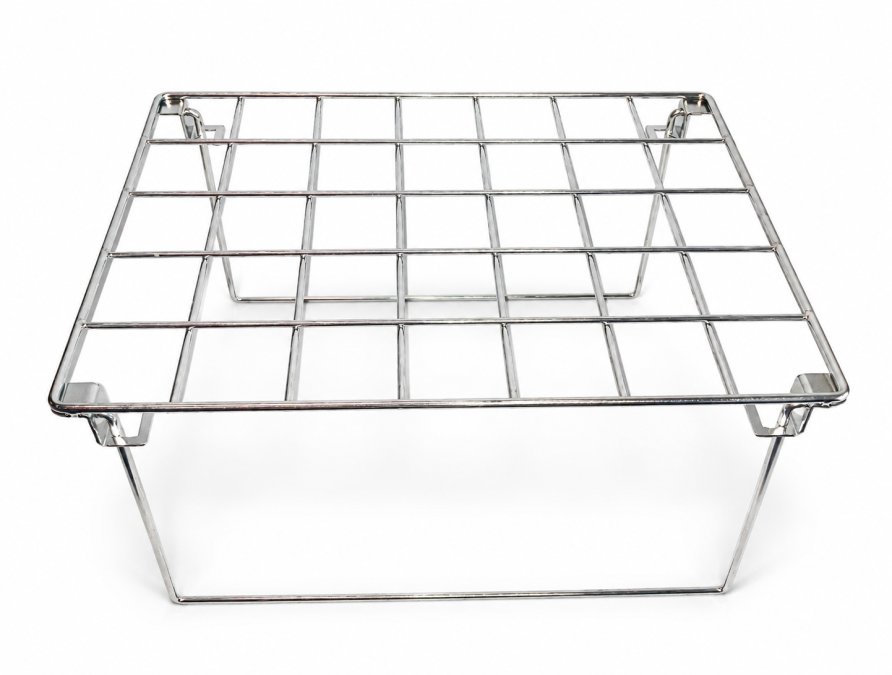
Start with block ice directly on the cooler floor to create a solid cold foundation and prevent water pooling. This is where our Fridge Mode™ setup comes in: a stainless steel cooler rack elevates food above the ice and meltwater, keeping everything dry while allowing cold air to circulate.

On the elevated rack, organize food by type and frequency of use.
This packing order prevents cross-contamination, keeps food organized like a real fridge, and eliminates digging through ice. When everything has a designated spot, you open the cooler less often and food stays at safe temperatures.
For long term food storage in coolers, this organization method is non-negotiable. Without it, you're essentially gambling with food safety and cooler performance.
How to Keep Food Dry in a Cooler During Multi-Day Trips
Soggy food is the number-one complaint from multi-day cooler users. Sandwiches absorb water, produce gets waterlogged, and crackers turn to mush, all because food sits directly on melting ice or in pooled meltwater.
The solution has two parts: elevation and drainage. Elevation keeps food physically above the water. Drainage ensures meltwater doesn't pool underneath your food storage area.
If your cooler has drainage holes, keep them clear so water drains out rather than accumulating. If it lacks drainage holes, tilt it slightly so water flows to one corner.
Use sealed containers for anything that can't get wet: bread, crackers, and baked goods in waterproof containers, produce in breathable bags, and raw meat in sealed, leak-proof containers for safety.
The most effective approach is an elevated rack or shelf.
Cooler Racks™ solves this directly. Our stainless steel racks elevate food 7 inches above ice and meltwater, and the 2x2-inch grid lets ice and water pass through so nothing sits in pooled meltwater.
Maximum Coverage Cooler Rack System (30″) →
Food-Specific Storage Duration and Rotation
Different foods have different safe storage windows in a cooler, even below 40°F.
Raw meat: Safe for 1-2 days in a properly cold cooler. After 48 hours, risk of bacterial growth increases significantly.
Cooked meat and poultry: Safe for 3-4 days if kept below 40°F consistently.
Dairy products: Safe for 3-4 days. Milk, cheese, and yogurt tolerate cooler storage well if kept cold.
Ready-to-eat food (sandwiches, deli meat, prepared dishes): Safe for 3-4 days.
Produce (vegetables and fruit): Safe for 5-7 days in a cooler.
Frozen food: Safe indefinitely if it stays frozen. Once thawed, treat it like fresh food with the same 1-4 day limits.
The rotation strategy for long term food storage in coolers is simple: eat perishable items first and save longer-lasting items for later.
Temperature Monitoring and Cooler Preparation
Temperature monitoring is the one strategy that separates safe long term food storage in coolers from risky guessing.
Buy an inexpensive cooler thermometer (under $15), place it inside before packing food, and check it every morning.
Pre-chilling is the single most effective preparation step. A room-temperature cooler takes hours to reach safe temperatures, wasting ice.
For trips longer than 4 days, plan an ice replacement strategy.
Some serious users bring a backup cooler for ice or combine block ice and dry ice for extended trips.
Long term food storage in coolers comes down to three fundamentals: keeping food elevated and dry, maintaining consistent cold temperatures, and organizing contents to minimize cooler opening.
Ready to upgrade your cooler setup? Cooler Racks™ makes the organization piece effortless. The Full Cooler System (25″) combines a compact and full-size rack for flexible organization, starting at $59.99.

| Strategy | Best For | Duration Impact |
|---|---|---|
| Block ice + pre-chilling | All trips | +50-100% longer cooling |
| Elevated rack system | Multi-day trips | Keeps food dry + organized |
| Temperature monitoring | Trips over 4 days | Prevents unsafe food |
| Sealed food containers | All trips | Prevents cross-contamination |
| Minimal cooler opening | All trips | +20-30% ice retention |
| Ice replacement plan | Trips over 5 days | Extends trip capacity |
According to USDA food safety guidelines, perishable food should not sit above 40°F for more than 2 hours total.
Frequently Asked Questions
How long can food safely stay in a cooler?
Perishable food stays safe in a cooler for up to 4 hours if the temperature stays at 40°F or below. After 4 hours, bacteria begin to multiply rapidly. For multi-day trips, you must maintain cooler temperature through consistent ice replacement and minimal lid opening. Block ice lasts longer than cubed ice, typically 5-7 days depending on cooler quality, external temperature, and how often you access the cooler. Pre-chill your cooler and use a temperature monitoring method to verify you're staying in the safe zone.
What's the best cooler packing order for food safety?
Pack your cooler in this order from bottom to top: block ice or ice packs first, then raw meat in sealed containers, then dairy and cooked food, and finally ready-to-eat items and drinks on top. This cooler packing order for food prevents raw meat juices from dripping onto other items. Using an elevated rack like Cooler Racks keeps food completely above melted water and ice, eliminating cross-contamination risk and keeping sandwiches and produce dry throughout your trip.
How do I keep food from getting soggy in a cooler?
Soggy food happens when items sit directly on ice or in meltwater. To keep food dry in a cooler, use an elevated food storage rack that sits 7 inches above the ice. This creates a barrier between your food and water. Store items in sealed containers or bags, and drain meltwater regularly, every 4-6 hours on warm days. Pre-chill your cooler before packing, use block ice instead of cubes, and minimize how often you open the lid. Pair your cooler rack with proper packing order to maximize dryness.
Does food safety in coolers require different rules for camping versus day trips?
Day trips under 4 hours have minimal risk if your cooler stays closed. Multi-day camping trips require active temperature management: monitor the internal temperature, drain meltwater regularly, and replace ice before it fully melts. Raw meat, dairy, and cooked food all follow the same 40°F rule regardless of trip length. The main difference is that long-term trips demand a structured packing system, like an elevated rack and block ice, to maintain food safety throughout. Cooler preparation before departure is also more critical for extended trips.
How often should I check or drain my cooler during a multi-day trip?
Drain meltwater every 4-6 hours, or more frequently on hot days. Check your cooler's internal temperature at least once daily using a simple thermometer to confirm it stays at or below 40°F. Open the lid only when necessary, each opening raises the internal temperature and speeds ice melt. If you're camping in direct sun or heat above 85°F, check every 3-4 hours. Block ice lasts longer than cubed ice, so you may need fewer replacements. A well-prepared cooler with proper insulation and organization minimizes how much attention you need to give it.
Can I use a soft-sided cooler for long-term food storage?
Soft coolers are designed for short trips and do not retain cold as long as hard-sided coolers. Hard-sided coolers have superior insulation, which is essential for long-term food storage. If you use a soft cooler for a multi-day trip, ice melts much faster, making it harder to keep food at a safe temperature. Hard-sided coolers, paired with proper packing methods and elevated food racks, are the reliable choice for trips longer than one day. Soft coolers work best for day trips under 4 hours.
What's the difference between block ice and cubed ice for cooler storage?
Block ice melts much slower than cubed ice, typically lasting 5-7 days versus 1-2 days, because it has less surface area exposed to warmth. For long-term food storage in coolers, block ice is the better choice. It maintains consistent cold temperature longer, requires fewer replacements, and takes up less space. Cubed ice cools faster initially but melts quickly, creating excess meltwater that can soak your food. Pair block ice with an elevated cooler rack to keep food dry and organized while maximizing cooling duration.
How do I prepare my cooler before a multi-day trip?
Pre-chill your cooler for at least 2-4 hours before packing by filling it with ice or storing it in a cool place. Pre-chill all food items as well, especially perishables. Clean and dry the interior to prevent mold. Use block ice as your primary cooling source, and add ice packs for extra cold retention. Set up your elevated food storage rack to keep items above ice and meltwater. Line the bottom with block ice, organize food by type using sealed containers, and minimize air gaps. This preparation ensures your cooler maintains safe temperature throughout your trip and keeps food dry.