

Which Marine Cooler Accessories Are Worth Buying?
Quick Summary
The most useful marine cooler accessories are secure mounting hardware, organizers that lift food above ice, and materials that resist salt, sun and moisture. Start with a secure mount so the cooler cannot slide, then add a rack that keeps food dry.
- Secure the cooler first, since a loose cooler is a hazard that can strike passengers or go overboard.
- Use a four-point tie-down anchored to through-bolted pad eyes or dedicated mounts, not rails or cup holders.
- Measure your cooler's interior before buying a rack, since interior length, width and height determine fit.
- The CR-SS-15 Full Size Cooler Rack costs $34.99 and gives a larger elevated area above the ice.
- Rinse gear with fresh water after each trip and inspect straps and fasteners at the start of each season.
Table of Contents
- Why Marine Cooler Accessories Matter on the Water
- Securing Your Cooler on a Moving Boat
- Choosing an Aluminum Cooler Rack for Your Boat
- Organizing Food Above Ice with a Cooler Organizer Rack
- Saltwater, UV and Corrosion: Materials That Last
- Matching Accessories to Your Boat Type and Available Space
- Building Your Marine Cooler Setup: Next Steps
- Frequently Asked Questions
Why Marine Cooler Accessories Matter on the Water
Last Updated: November 13, 2026
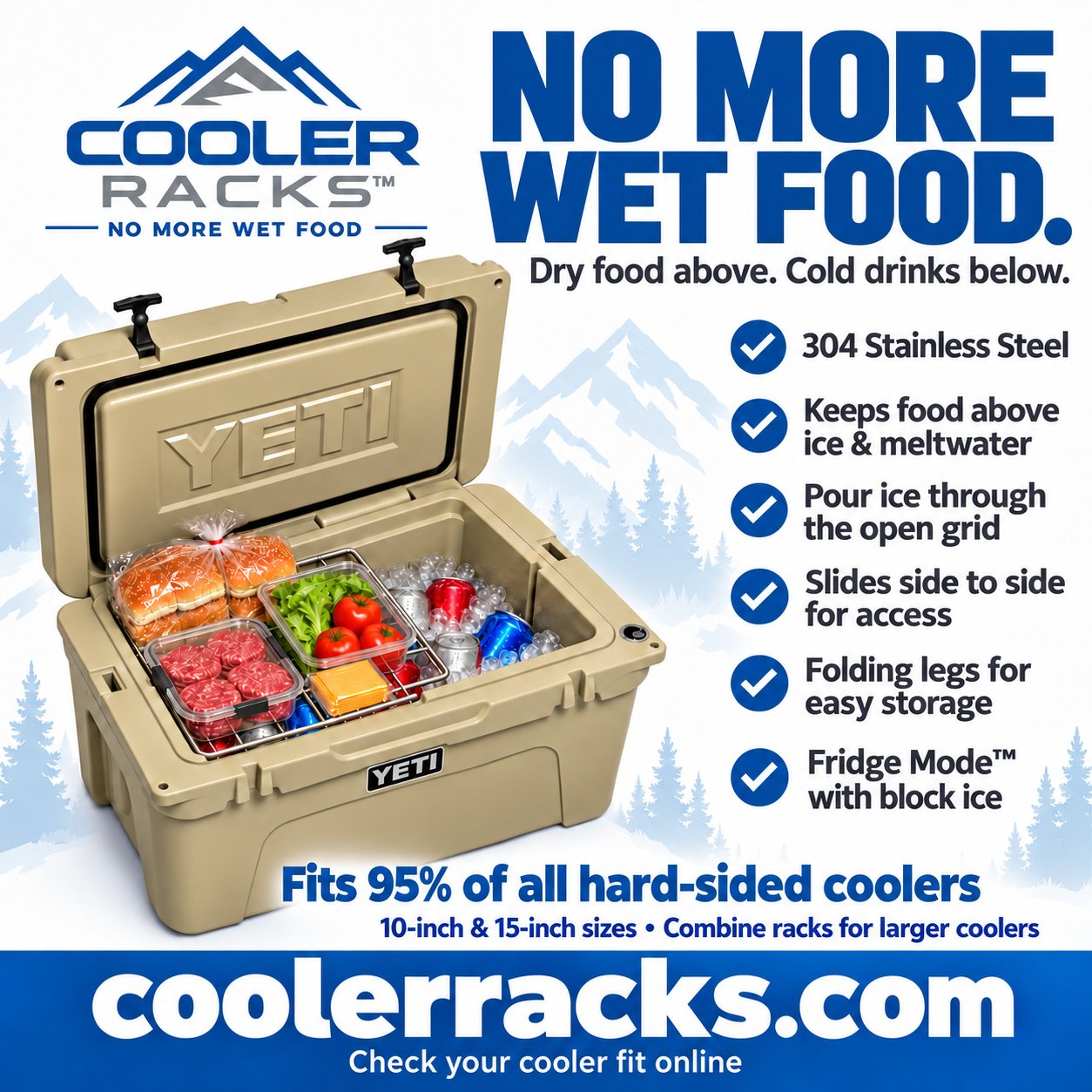
The right marine cooler accessories can turn a basic ice chest into a well-run galley. Most boaters buy a cooler and stop there, then spend the afternoon digging through melt water for a sandwich.
Most of the accessories worth buying fall into a few groups: mounting and securing hardware, organizers that separate food from ice, and materials that hold up to salt, sun and constant moisture. Boat decks are harsh places for gear. Coolers slide, lids open, and hardware corrodes.
Cooler Racks™ focuses on the organization problem. Its racks, including the CR-SS-10 Compact Cooler Rack at $29.99 and the CR-SS-15 Full Size Cooler Rack at $34.99, are designed for hard-sided coolers.
Below, we cover how to secure a cooler on a moving boat, which rack sizes fit common setups, and which materials last in saltwater. We also explain how to match accessories to your boat and the space you have.
Securing Your Cooler on a Moving Boat
A cooler that shifts on a boat deck is a hazard, not just an annoyance. Our complete guide to seating and securing an ice chest on a boat walks through the full setup step by step. A loose cooler can strike a passenger, damage the hull, or go overboard in rough water. Securing it is the first accessory decision to make, and it is the step most accessory roundups skip entirely.
Why a Loose Cooler Is a Load Problem, Not a Storage Problem
Under acceleration, turning, and wave impact, that mass wants to keep moving. The accessory's job is to transfer that load into the boat's structure through solid anchor points rather than through the cooler's handles or lid. That is why a strap hooked to a thin rail or a plastic cleat can fail even when it looks tight at the dock.
Mounting Kits and Tie-Downs
Tie-downs and mounting kits hold the cooler in place. Choose straps or brackets made from marine-grade materials, since saltwater corrodes cheap hardware quickly. Check that the anchor points are solid and that the strap tension holds after the boat has been running for a while.
A practical pattern is a four-point tie-down: two straps over the lid and two around the base, each anchored to a through-bolted pad eye or a dedicated cooler mount rather than to a rail or cup holder. If your cooler has molded tie-down slots, use them; if it does not, a base bracket or cooler feet that lock into a recessed well will do more than a single strap across the top.
Watch out: a strap that looks tight at the dock can loosen once the boat starts bouncing, so check tension after the first few minutes underway and again after any rough stretch.
Pontoon and Deck Holders
Pontoon boats have flat decks and open rails, which suit cooler holders that clamp to a rail or sit in a recessed well. Look for holders that lock the cooler base firmly and allow easy access to the lid. A holder that makes you lift the cooler over a rail each time you want a drink will get ignored after the first day.
On a center console or bass boat, deck space is tighter and the cooler often doubles as a casting platform or seat. In that case, a low-profile base mount or a cooler with non-skid feet plus a single base strap is usually enough, provided the mount is bolted through the deck and backed underneath. On a cabin boat, stow the cooler in a dedicated well or against a bulkhead so it cannot slide into the helm.
Matching the Mount to Your Boat
- Small open boats: base bracket or recessed well plus one strap; keep the footprint minimal.
- Pontoon and deck boats: rail-clamp holder or recessed well with a lid-access cutout.
- Center consoles and fishing boats: through-bolted pad eyes with a four-point tie-down, or a cooler seat mount.
- Cabin boats: dedicated well or bulkhead stowage with a single securing strap.
Whatever you choose, inspect the anchor points each season for corrosion, cracked sealant, or loose fasteners. A mount that was solid last year can be the weak link this year.
The table below summarises which mount suits each type of boat, based on the options covered in this section.
| Boat type | Recommended mount | Key note |
|---|---|---|
| Small open boats | Base bracket or recessed well plus one strap | Keep the footprint minimal |
| Pontoon and deck boats | Rail-clamp holder or recessed well | Include a lid-access cutout |
| Center consoles and fishing boats | Through-bolted pad eyes with four-point tie-down | Cooler seat mount also works |
| Cabin boats | Dedicated well or bulkhead stowage | Single securing strap |
Choosing an Aluminum Cooler Rack for Your Boat
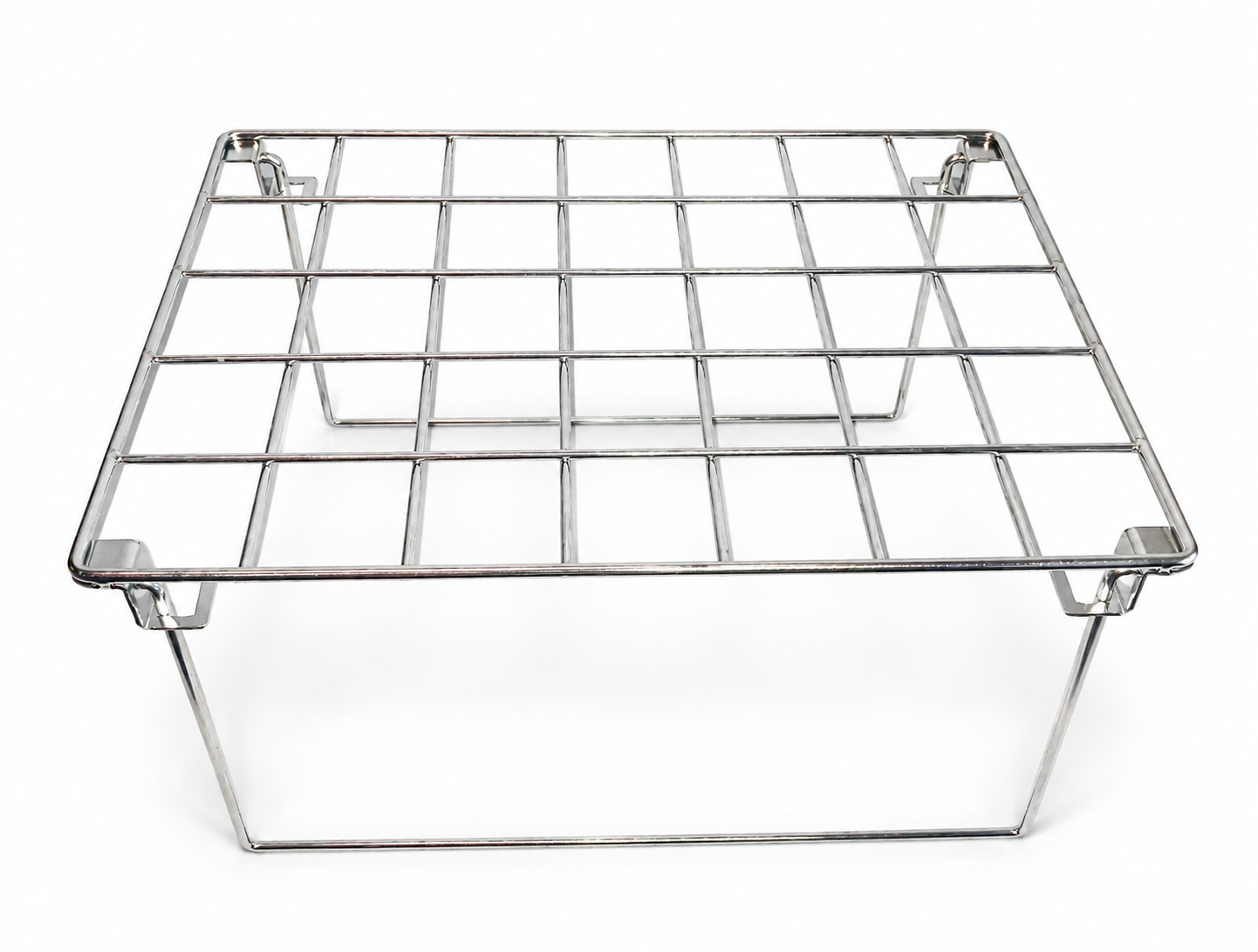
Cooler Racks™ builds its racks from 304 food-grade stainless steel, which is rustproof and dishwasher-safe.
For a boat setup, the rack size should match your cooler's interior. Our Maximum Coverage Cooler Rack System (30″) includes two CR-SS-15 racks for larger coolers and is priced at $64.99. If you have a compact cooler, the CR-SS-10 Compact Cooler Rack at $29.99 may be enough. You can also compare our Best Cooler Rack Systems for Boat Decks Compared before deciding.
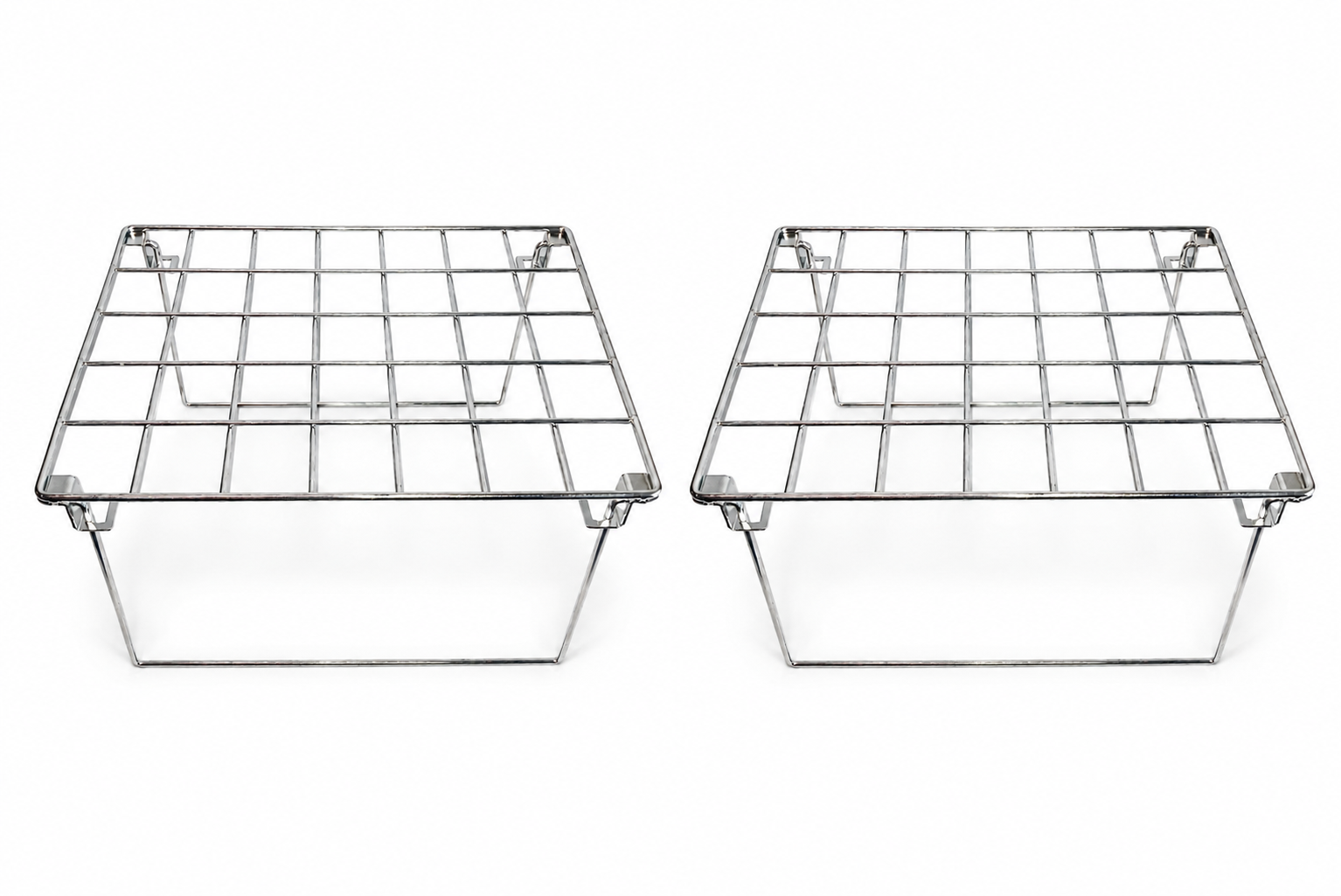
Measure the inside of your cooler first. Interior length, width and usable height determine what fits. Check the minimum interior dimensions in each product listing before ordering.
Cooler rack prices
Organizing Food Above Ice with a Cooler Organizer Rack
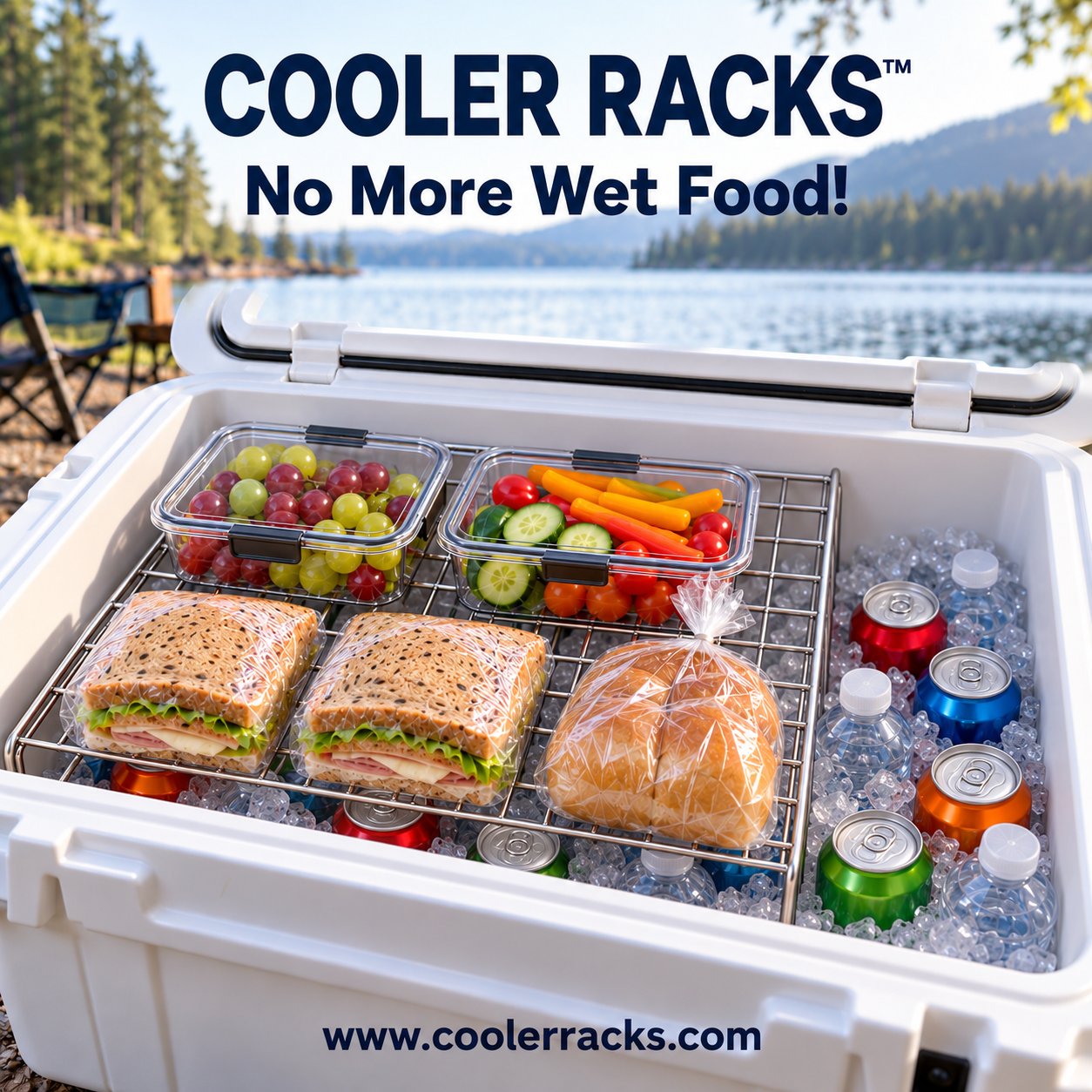
Food placed directly on ice gets soggy, and sandwiches can end up sitting in melt water. A cooler organizer rack lifts food above the ice so meltwater drains below. The CR-SS-15 at $34.99 is the rack to use when you want a larger elevated area for sandwiches, snacks and containers, with cold drinks kept below.
Packing matters as much as the rack. Put dry, sealed food on the rack and drinks in the ice underneath. Keep the lid closed when you are not reaching in, since every opening lets warm air in. Many boaters find that a single rack is enough for a day trip, while a full group outing calls for more space.
Saltwater, UV and Corrosion: Materials That Last
Marine environments are hard on gear. Salt spray, direct sun and constant moisture work together to degrade plastics, coatings and metal. Materials matter more on the water than almost anywhere else, and the difference between a setup that lasts three seasons and one that lasts ten usually comes down to a few specific choices.
How Salt, Sun, and Moisture Attack Gear
UV exposure breaks down polymer chains in plastics and coatings, causing chalky surfaces, cracks, and flaking. Constant moisture, especially in a closed cooler, feeds mildew and odor. The practical response is to choose materials that resist all three and to rinse and dry gear before storage.
Reading Material Labels Like a Boater
Stainless steel resists corrosion well, and 304 food-grade stainless steel is a common choice for food-contact equipment. Cooler Racks™ states that its racks are rust-resistant, food-safe and dishwasher-safe, with no plastic parts or coatings.
When you evaluate any accessory, check for:
- Stainless steel or marine-grade aluminum construction
- No painted or coated surfaces that can flake
- Simple cleaning, so salt and residue do not build up
- Hardware that matches the rest of the setup, so dissimilar metals do not corrode each other
Rinse, Dry, and Store
Rinse everything with fresh water after each trip. Dry it before storing, especially the folding legs and hinges. Leave the cooler lid open to air out between trips, and wipe the drain plug and seal with a mild soap solution to keep mildew and odor from taking hold. A quick freshwater rinse takes a minute and is the single highest-value maintenance step for any marine accessory.
Watch out: rinsing only the visible surfaces leaves salt trapped in hinges, drain threads, and strap hardware, which is where corrosion usually starts.
A Simple Seasonal Check
At the start of each season, inspect racks, straps, and mounts for pitting, rust stains, or cracked plastic. Replace any strap that has stiffened or faded, and re-tighten fasteners that have worked loose. A five-minute check prevents the mid-season failure that ruins a trip.
Matching Accessories to Your Boat Type and Available Space
The right accessory depends on your boat and how much room you have. A small bass boat has very little deck space and needs a compact rack or a mounting kit that takes up minimal footprint. A pontoon or larger cruiser can handle a full-size rack, or two racks in a double setup.
Our Double Cooler Rack Setup (20″) at $54.99 pairs two CR-SS-10 racks and suits a cooler that is long enough to hold two compact racks side by side. The Full Cooler System (25″) at $59.99 combines a compact and a full-size rack for two different food zones. Standard shipping is $10.
Think about three things before buying:
- How much deck space is free once the cooler is in place
- Whether the cooler will be stowed on deck, in a well or on a rail
- How many people you usually feed on a trip
Accessories cost more when you buy in bulk, so start with the one that solves your biggest problem, then add pieces as your needs become clear. Our Cooler Rack Setup Comparison covers when one rack is enough and when two sizes make sense.
Building Your Marine Cooler Setup: Next Steps
Start with the problem that costs you most on the water. If the cooler slides, buy a secure mount before anything else. If food gets soggy, start with a rack that lifts sandwiches above the ice. Then choose materials that will hold up to salt and sun.
Cooler Racks™ is built for the organization side of that setup. Its stainless steel racks keep food dry above the ice, and the bundles give you two elevated areas for larger coolers. To find the right rack for your cooler, start with the Maximum Coverage Cooler Rack System (30″) for a full-size setup, or the CR-SS-15 Full Size Cooler Rack (15″) if you only need one elevated area.
Frequently Asked Questions
How do you lock a cooler on a boat?
Most boaters secure a cooler with a ratchet strap or cam-lock tie-down anchored to a cleat, rod holder or deck eyelet, rather than relying on the cooler's own weight. Choose straps suited to marine use. Position the cooler low and near the centerline, and check the tie-down before each run. Pairing straps with a fitted mounting kit gives the most reliable hold when the boat is underway.
Is it better to put ice in the top or bottom of a cooler?
Ice belongs on the bottom and along the sides, with food on a rack above it. Cold air sinks, so ice below keeps the whole interior cool, while meltwater collects underneath instead of soaking packaged food. A rack with a 2 x 2-inch grid lets loose ice pass through, so the food stays dry as the ice melts. Cold drinks can sit on the floor below the rack.
Do I need an aluminum cooler rack for my boat, or is stainless steel better?
Aluminum and stainless steel are both used for boat gear, and either can work if it is rated for marine use and sized to the cooler's usable interior. Either works if it is rated for marine use and sized to the cooler's usable interior. Cooler Racks sells 304 food-grade stainless steel racks in 10-inch and 15-inch lengths, starting at $29.99.
What should I put between food and ice in a cooler?
A rigid rack is the simplest barrier, keeping packaged food out of meltwater entirely. If you use a rack, it can be the only separation you need. Sealed bags and waterproof containers add protection for items that must sit directly on the rack. Avoid placing raw meat above produce or ready-to-eat food, and keep drinks below the rack where they stay cold.
