

Big Coolers Compared: Size, Wheels, and Ice Retention
Quick Summary
Big coolers are best sized by usable interior length, width, and height rather than quart count alone, since a tall, narrow cooler can hold less than a wide, shallow one. Measure the inside before buying, and remember that a loaded big cooler is usually a two-person lift.
- Measure usable interior length, width, and height before buying any cooler.
- Height often limits capacity, because racks and trays need clearance above the ice.
- Hard-sided coolers insulate better and suit multi-day trips; soft-sided ones suit short trips.
- Ice is the heaviest part of a loaded big cooler, so plan for two-person lifting.
- Place ice on the bottom and set a rack above it to keep food out of meltwater.
Table of Contents
- How Big Is Big? Cooler Sizes and Capacity Explained
- Hard-Sided vs. Soft-Sided: Which Big Cooler Fits Your Trip
- Large Cooler 200 Qt: What It Holds and Who Needs It
- Big Coolers With Wheels: Portability and Loaded Weight
- Big Coolers for Camping: Ice Retention, Durability and Food Safety
- YETI Cooler vs. Igloo Cooler: How the Big Names Compare
- Keep Food Dry in Your Big Cooler and Plan Your Next Pack
- Frequently Asked Questions
How Big Is Big? Cooler Sizes and Capacity Explained
Last Updated: November 16, 2026
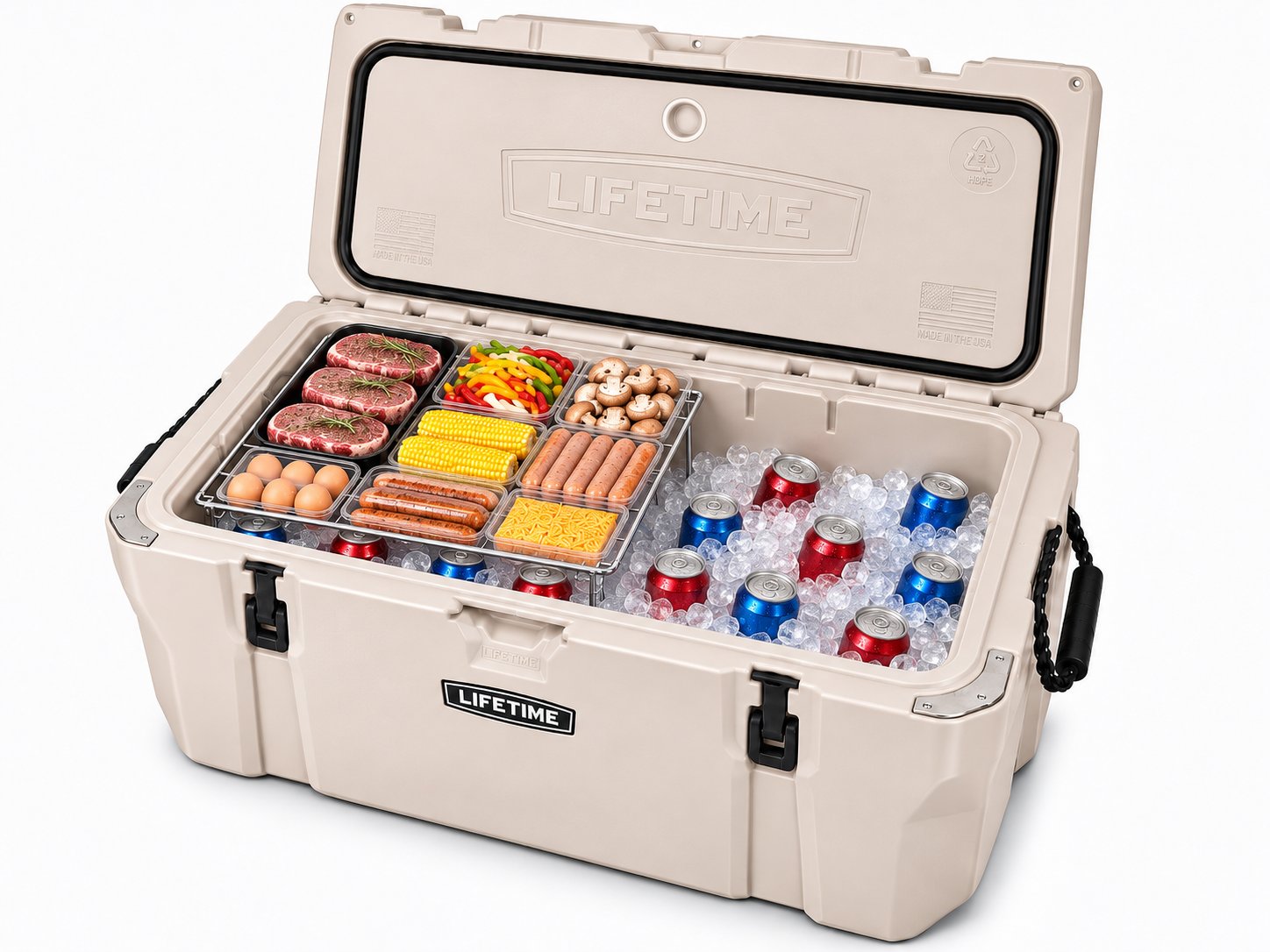
Most shoppers searching for big coolers want to know one thing first: how large is large enough? Cooler Racks™ builds folding 304 food-grade stainless steel racks that keep food above ice and meltwater inside hard-sided coolers. The right answer depends on what you pack, how many people you feed, and how long you stay out.
Big coolers come in many sizes. Capacity is usually measured in quarts. Interior dimensions matter more than the quart number, though. A tall, narrow cooler can hold less food than a wide, shallow one with the same volume.
Measure the inside of any cooler before you buy. Usable interior length, width, and height tell you more than the marketing number. For food storage, height is often the limiting factor, because a rack or tray needs clearance above the ice. Our CR-SS-15 Full Size Cooler Rack measures 15 inches long by 11 inches wide by 7 inches high, so measure your cooler's usable interior before ordering.
Common mistake: buying the largest cooler you can afford. Match the size to the load, and use a rack to separate food from ice so the extra room stays organized instead of soggy.
Hard-Sided vs. Soft-Sided: Which Big Cooler Fits Your Trip
Hard-sided coolers and soft-sided coolers solve different problems. Hard-sided models generally insulate better and hold up to rough handling. They are heavier, but they suit long camping trips, boat outings, and anyone who plans to keep ice for several days. Soft-sided coolers are lighter and easier to carry, which works for shorter trips and car-based picnics.
Our racks are designed for hard-sided coolers only. If you rely on a soft cooler for most trips, a rack is not the right fit.
Ask yourself three questions:
- How long will the cooler stay closed between ice refills?
- Will it ride in a truck bed or a car trunk?
- Do you need to keep food separated from ice melt?
If the answer to the third question is yes, a hard-sided cooler with a stainless steel rack is the more practical setup.
Large Cooler 200 Qt: What It Holds and Who Needs It
A 200-quart cooler is a large option for big groups and extended outdoor trips. Expect it to weigh a lot even when empty, so plan for two people to move it.
A 200-quart cooler has plenty of room for a full cooler system. Two racks side by side, such as our Maximum Coverage Cooler Rack System (30″), give you two elevated food areas with drinks and ice below. Measure the interior first to confirm the fit, since usable dimensions vary between models.
Big Coolers With Wheels: Portability and Loaded Weight
Wheels and a telescoping handle make a big cooler practical to move, but they do not make it light. A loaded 120-quart cooler can weigh well over 100 pounds once you add ice, drinks, and food, so rolling it across a campsite or dock is far easier than carrying it. The planning question is whether the wheels, handle, and vehicle can handle the loaded weight.
Do the loaded-weight math before you buy
Ice is the heaviest thing in a big cooler, and it is easy to underestimate. Check the manufacturer's spec sheet for the empty weight, and plan for the ice, food, and drinks to add significant weight. A loaded big cooler is usually a two-person lift, even with wheels.
Wheel type and ground surface
A telescoping handle should extend far enough that you are not hunched over while pulling a heavy load. Check the handle height against the tallest person who will move the cooler, and confirm the handle locks in the extended position so it does not collapse mid-pull.
Vehicle fit and securing the load
Measure the cooler's exterior dimensions, not just the interior, before you commit. A 200-quart cooler may not fit between the wheel wells of a mid-size pickup or through the rear hatch of an SUV, and a tall cooler can block rear visibility. If you regularly haul a heavy cooler in a pickup, secure it so it cannot slide; How to secure a 120 quart cooler in a truck bed covers the practical options, including straps, cargo bars, and bed dividers.
When wheels are the wrong choice
Wheels add weight, hardware, and failure points. If the cooler will live on a boat, in a truck bed, or on a deck and rarely move far, a wheel-less model with molded handles may be lighter and more durable. If you routinely move a loaded cooler more than a few dozen yards, wheels earn their weight back quickly.
Big Coolers for Camping: Ice Retention, Durability and Food Safety
Camping puts the biggest demands on a cooler. It sits in heat, gets bumped and dropped, and has to keep food safe for days. Read the complete guide to hard-sided cooler food storage for the full picture.
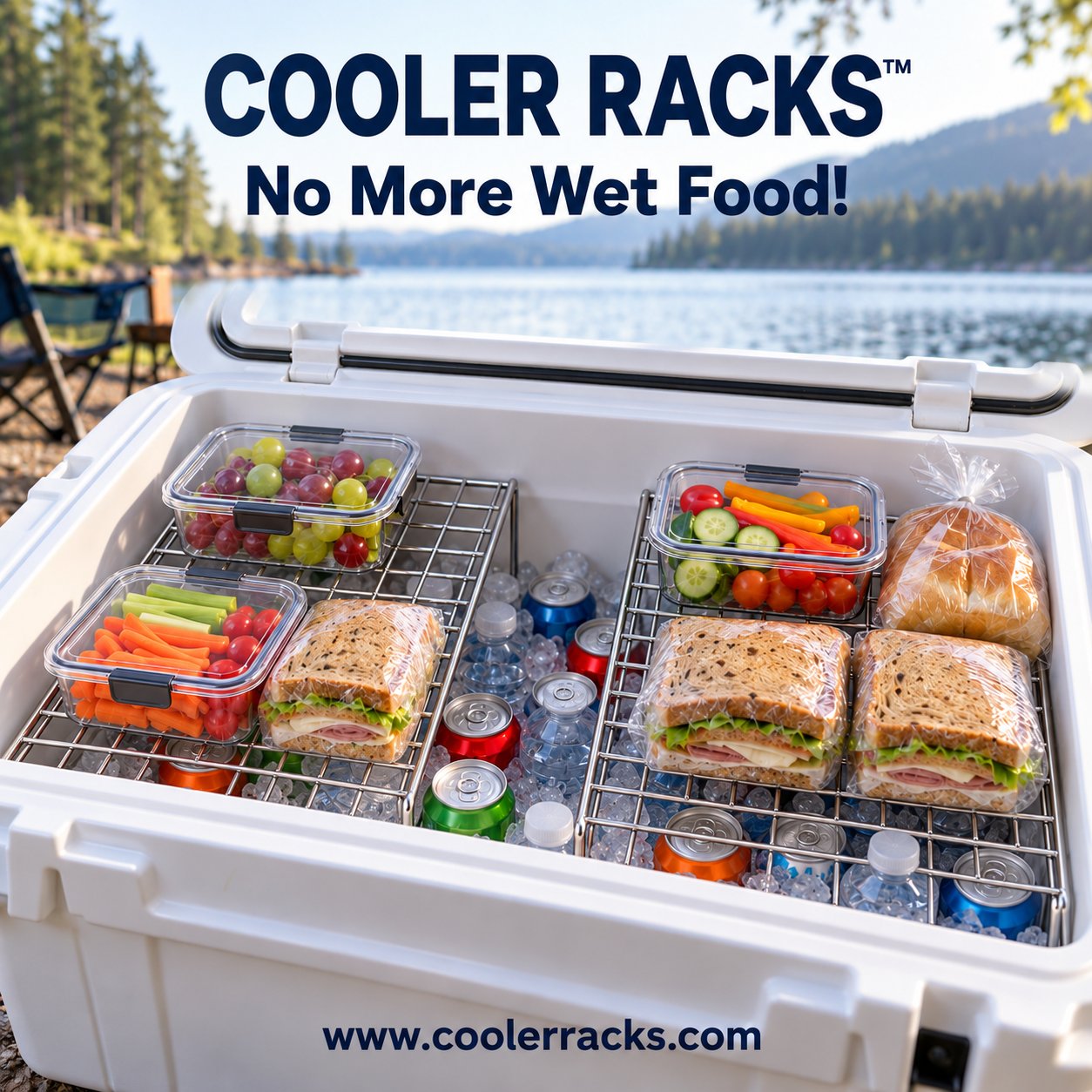
Keep perishable food out of the meltwater. This is where a rack helps: it lifts sandwiches, produce, and containers above the melt, while drinks and ice stay below.
Our racks are made from 304 food-grade stainless steel, which is rust-resistant and dishwasher-safe.
YETI Cooler vs. Igloo Cooler: How the Big Names Compare
YETI and Igloo are the two brands most people weigh when they shop for a big cooler, but they sit at opposite ends of the market. Compare ice retention, price, and real-world performance side by side before you decide.
Construction and insulation
The biggest structural difference is how the body is made. YETI's hard coolers use rotomolded polyethylene, a single-piece molded shell with thick walls and a gasket-sealed lid, which is why they are heavy and expensive but hold ice well. Igloo's lineup spans blow-molded and injection-molded hard coolers with varying insulation thickness, plus soft-sided and wheeled models. Within Igloo's range, ice retention varies widely by model, so the brand name alone tells you less than the spec sheet does.
Sizes and capacity
Both brands cover the large and extra-large end of the market, but the size ladders differ. YETI's hard cooler line runs from small personal sizes up through large models in the 100-quart-and-above range, with a limited number of extra-large options. Igloo's catalog is broader, with many sizes and price points, including 100-quart-and-up wheeled models aimed at tailgaters and campers. If you need a specific interior dimension to fit a rack or tray, check the published interior specs for the exact model rather than assuming a brand-wide size.
Price and total cost
Upfront price is where the two brands diverge most. YETI coolers cost several times what a comparable-capacity Igloo costs, and the gap widens at the large end. The fair comparison is total cost of ownership: purchase price plus ice use over the cooler's life, accessories, and warranty coverage. A premium cooler that holds ice a day longer per fill can offset part of its price on multi-day trips, but for day trips and tailgates the ice savings are small. Igloo's lower price also means replacing a damaged cooler costs less, which matters if it rides in a truck bed or on a boat.
What to check on any big cooler
| Factor | What to check |
|---|---|
| Interior size | Length, width, and height, not just quarts |
| Ice retention | Insulation thickness and lid seal |
| Weight when loaded | Plan for two people to lift it |
| Warranty | Length and what it covers |
| Budget | Compare total cost, including ice and accessories |
Whichever cooler you buy, a stainless steel rack keeps food above the ice. Measure the usable length, width, and height of the specific model before you order.
Keep Food Dry in Your Big Cooler and Plan Your Next Pack
A big cooler works best when you plan the packing order. Place ice on the bottom, then set a rack above it. Put sandwiches, produce, and sealed containers on the rack, and keep drinks and extra ice below.
Organize food by meal so you can grab what you need without digging through ice.
Our CR-SS-10 and CR-SS-15 racks come in two sizes, and the bundles pair both sizes for a larger cooler. Choose by the usable interior measurements of your cooler, and measure before you order.
Cooler Racks™ builds stainless steel racks that keep food dry above the ice in hard-sided coolers. Pick the size that matches your cooler, and set up your next trip with food above the ice and drinks below.
Frequently Asked Questions
What's the biggest cooler you can buy?
Before choosing the biggest option, measure your vehicle bed or cargo space and check how much a full cooler weighs.
Are big coolers with wheels easier to transport?
Yes, wheels and a telescoping handle make big coolers much easier to move across pavement, sand and gravel, especially when they are full. Wheels matter most for coolers over 100 quarts, where loaded weight quickly becomes hard to lift. Check that the wheels are sized for the surfaces you use, since small wheels can struggle on beaches and uneven campsites.
How can you keep food dry inside a large cooler?
Melted ice water collects at the bottom of a cooler and soaks anything sitting in it. A freestanding stainless steel cooler rack, such as the CR-SS-15 Full Size Cooler Rack (15 x 11 x 7 inches, $34.99), lifts sandwiches, produce and containers above the ice and meltwater, while drinks and ice stay below. Pair a rack with block ice for our Fridge Mode™ setup: organized food storage above the ice without electricity.
Is a hard-sided cooler better than a soft-sided cooler for camping?
Cooler Racks products are designed for hard-sided coolers only, so match your rack to a hard-sided model before buying.
