

9 Healthy Road Trip Meal Prep Ideas That Stay Fresh
Last Updated: November 5, 2026
Quick Summary
Healthy road trip meal prep means cooking make-ahead meals like overnight oats, sheet-pan eggs, pasta salad, and chicken salad, then portioning them into labeled containers for the cooler. Good road trip meal prep also pairs these with shelf-stable snacks and keeps cold food at 40°F or below.
- Overnight oats take about five minutes and hold in a cooler for up to three days.
- A dozen sheet-pan eggs yields roughly 12 squares, enough for three breakfasts for a family of four.
- Keep cold food at 40°F or below and hot food at 140°F or above.
- Discard perishable food left above 40°F for more than two hours, or one hour above 90°F outside.
- The CR-SS-10 Compact Cooler Rack costs $29.99 and gives 7 inches of elevation above the ice.
Table of Contents
- Why Road Trip Meal Prep Saves Money and Keeps Everyone Fed
- Easy Healthy Road Trip Meal Prep Ideas You Can Make Ahead
- Road Trip Food Ideas No Refrigeration Needed
- Healthy Road Trip Meals for Adults Who Want Real Food
- Healthy Road Trip Meal Prep Ideas for Family Trips
- Food Safety and Cooler Temperature Guidance
- Packing Equipment and Storage Strategy for a Multi-Day Trip
- Build Your Trip-Length Meal Plan and Shop Cooler Racks
- Frequently Asked Questions
Why Road Trip Meal Prep Saves Money and Keeps Everyone Fed
Healthy road trip meal prep ideas start with one simple truth: the food you pack decides how the day goes. Many campers and families leave with good intentions, then hit a drive-thru by noon.
Packing your own meals changes the math. It also changes how everyone feels when they arrive.
The Real Cost of Drive-Thru Stops
A family of four eating three fast-food meals a day spends real money fast. Add drinks and snacks, and a week on the road gets expensive.
What a Good Cooler Setup Changes
A cooler packed with loose ice turns sandwiches into mush. That is the problem most guides skip.
One practical fix is elevation: keeping food above the meltwater helps it stay dry. If you want the full method, our guide on how to pack a cooler for road trip walks through it step by step.
Easy Healthy Road Trip Meal Prep Ideas You Can Make Ahead
Make-ahead meals do the heavy lifting on any trip. Cook once at home, portion it out, and the road becomes simple. The difference between a plan that works and one that collapses by day two is specificity: how much to make, how long it keeps, and what order to eat it in.
Here are the prep-ahead winners we recommend most, with the details that make them practical.
Overnight Oats and Sheet-Pan Eggs
Overnight oats take about five minutes the night before. For each serving, combine 1/2 cup rolled oats, 1 tablespoon chia seeds, 1 tablespoon ground flax, a pinch of cinnamon, and 1/2 cup yogurt or milk in a jar. Top with blueberries and granola in the morning. Make one jar per person per breakfast day; they hold in a cooler for up to three days.
Sheet-pan eggs work the same way. Whisk a dozen eggs with a handful of spinach and 1/2 cup diced turkey, pour into a lined sheet pan, and bake at 350°F until set, about 15 to 20 minutes.
Worried about eggs on ice? Our article on whether it is safe to store eggs on ice in a cooler answers that directly.
Pasta Salad, Chicken Salad, and Nut Butter Sandwiches
Pasta salad holds up for days and tastes better after a night in the cooler.
Chicken salad goes in wraps or small containers. Poach and shred two pounds of chicken, mix with a modest amount of mayonnaise or Greek yogurt, and portion into single servings.
Nut butter sandwiches are the easiest backup: peanut butter and jelly on pretzel bread survives a full day of driving.
A Prep-Day Sequence That Fits in One Afternoon
The order matters more than the recipes. A common pattern is:
- Start the sheet-pan eggs first, since they bake unattended.
- While the oven runs, cook pasta and poach chicken for salads.
- Mix overnight oats last so they sit overnight and are ready for departure morning.
- Cool everything completely before it goes into the cooler; warm food raises the cooler's internal temperature.
- Label each container with the day it should be eaten so the oldest food gets eaten first.
Give cooked food time to cool on the counter before it goes in the cooler.
Map the Prep to Your Trip Length
Match the number of meals you prep to the days you will be on the road, not to how much cooler space you have. A simple planning table keeps the prep afternoon focused:
| Trip Length | Breakfasts to Prep | Lunches to Prep | Snack Servings |
|---|---|---|---|
| Day trip | 0 | 1 | 2 per person |
| 2-3 days | 2 | 3 | 3 per person |
| 4+ days | 3 | 4 | 4 per person |
Prep the first two days fully and plan to restock fresh items at a grocery stop on longer trips. That keeps the cooler from overflowing and keeps the food fresher.
Road Trip Food Ideas No Refrigeration Needed
Not everything needs a cooler. A smart stash of shelf-stable food covers the gaps between stops.
Pack these in a separate bag so you are not opening the cooler every hour.
Shelf-Stable Proteins and Snacks
Protein keeps everyone full longer. Good no-fridge options include:
- Nuts and trail mix
- Nut butter packets
- Roasted chickpeas
Skip chocolate-coated snacks in summer. They turn into a puddle.
Fresh Fruit and Vegetables That Travel Well
Apples, oranges, and grapes handle bumps and heat better than berries. Carrots and veggie sticks stay crisp in a sealed container.
Berries bruise fast, so eat them early in the trip. For the full method, see our seven steps to keep produce fresh in an ice chest.
Healthy Road Trip Meals for Adults Who Want Real Food
Adults get tired of chips and granola bars by day two. Real food is possible with a little planning.
The goal is simple: protein, a whole grain, and something fresh in every meal.
Protein, Portion, and Whole Grain Basics
Build each meal around a protein source. Hard-boiled eggs, chicken, turkey, cheese, and Greek yogurt all work.
Add a whole grain: oats, whole wheat bread, or pasta salad. Then add color with fresh fruit or vegetables.
Portion ahead. Pack single servings so nobody overeats or wastes food.
Low-Mess Foods for Eating at a Rest Stop
Rest stops are not dining rooms. Choose food you can eat with one hand and no plate.
Wraps beat sandwiches with loose fillings. Hummus with veggie sticks is clean and filling. Muffins and pretzel bread travel without crumbling.
Watch out: saucy foods leak in a moving car. Keep dressings in separate small containers.
Healthy Road Trip Meal Prep Ideas for Family Trips
Feeding a family on the road takes a different plan. Volume goes up, and picky eaters enter the picture.
Prep in bulk and pack in clear containers so kids can grab their own food.
For larger groups, our cooler food storage guide for large families covers packing at that scale.
Allergen-Aware Swaps and Picky Eater Options
If someone avoids nuts, swap nut butter for sunflower seed butter. Use gluten-free pretzel bread or crackers where needed.
Keep a labeled bin for allergy-safe food. That prevents cross-contact and arguments.
Picky eaters do better with familiar foods. Pack plain versions and let kids add sauces themselves.
Kid-Friendly Snacks That Do Not Create a Mess
Mess-free snacks save your back seat. Try:
- Apple slices with a dip cup
- Cheese sticks
- Grapes already pulled off the stem
Avoid anything with loose powder or sticky glaze.
Food Safety and Cooler Temperature Guidance
Food safety is the part most road trip guides skip. It matters more than any recipe, because a single warm afternoon can spoil a cooler full of prepped food.
The standard to follow is the one published by the USDA Food Safety and Inspection Service guidance on keeping food safe.
The Two-Hour Rule on the Road
Perishable food should not sit above 40°F for more than two hours. That clock starts the moment the cooler lid comes off at a rest stop, not when you leave the house. If the outside temperature is above 90°F, shorten that window to one hour.
A few rules we follow:
- Keep the cooler out of direct sun and off hot pavement; a blanket or a shaded spot under the vehicle helps.
- Use block ice or frozen water bottles for longer trips.
- Drain meltwater daily so food is not sitting in water that has warmed above safe temperature.
When to Discard Food
Discard any perishable food that has been above 40°F for more than two hours, or more than one hour if the outside temperature is above 90°F. Do not taste it to check. Discard food that has been in contact with meltwater from ice that has warmed, and discard anything that smells off or feels warm to the touch.
A common pattern is to treat the cooler as a two-zone system: one zone for food that must stay coldest, one for drinks that get opened constantly.
Watch out: a cooler that sits in a hot trunk all afternoon warms faster than you think. Move it inside when you stop for the night, and add fresh ice before bed so the next day starts cold.
A Backup Reference for Cold Storage Limits
Our FoodSafety.gov guide to food safety in emergencies is a useful backup reference for cold storage limits when you are planning a longer trip or restocking along the way.
Packing Equipment and Storage Strategy for a Multi-Day Trip
Storage strategy decides whether day three feels organized or chaotic. Pack by meal, not by food type.
Use clear containers, label them by day, and keep snacks in a separate bag.
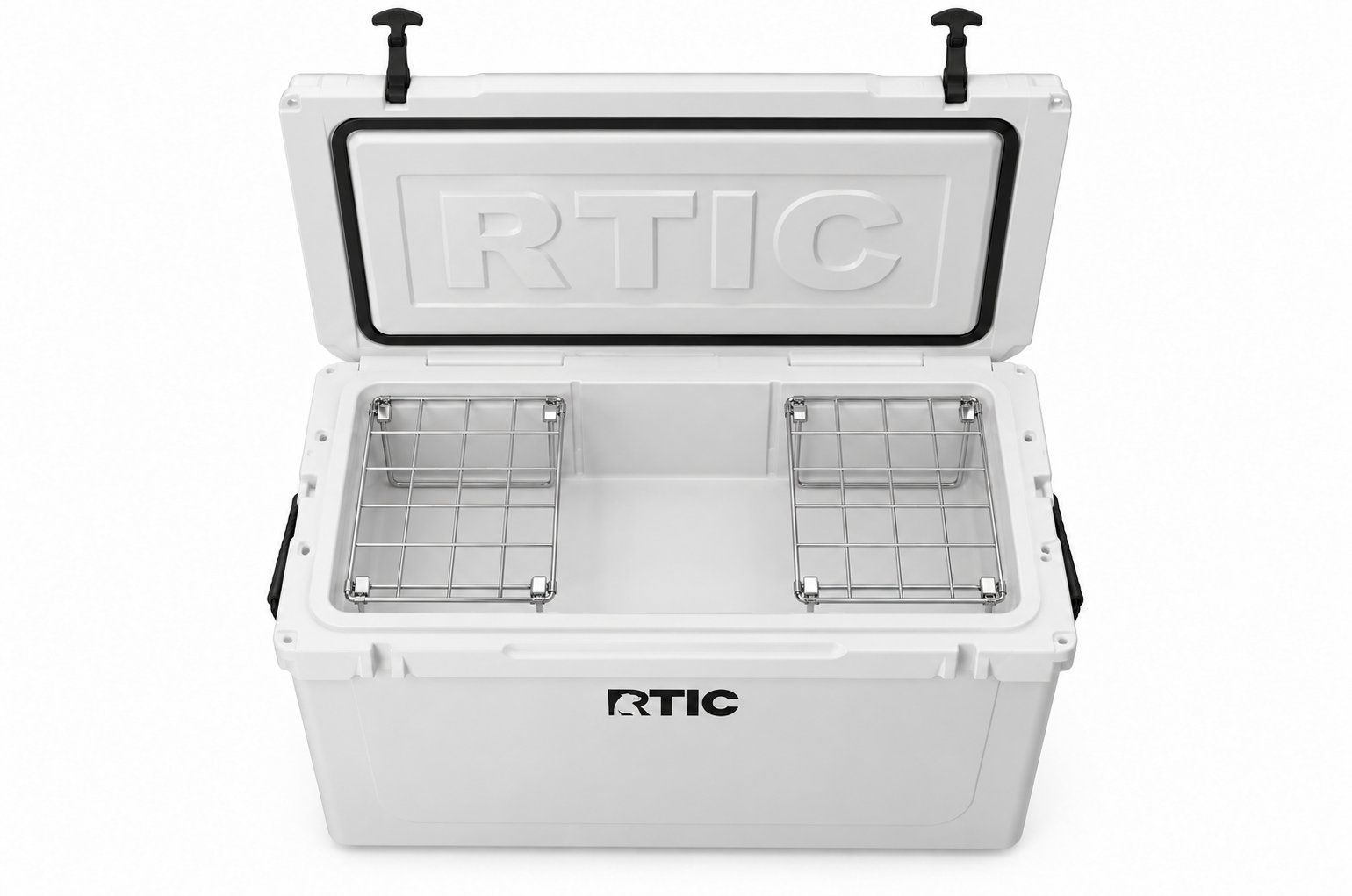
Cooler Racks are designed to keep food elevated above ice and meltwater.
Both are made from 304 stainless steel, and the racks have folding legs for compact storage.
Build Your Trip-Length Meal Plan and Shop Cooler Racks
A trip-length plan beats a pile of random snacks. Match your meals to the number of days and how much cooler space you have.
| Trip Length | Meals to Prep | Cooler Strategy |
|---|---|---|
| Day trip | 1 meal, 2 snacks | One rack, loose ice |
| 2-3 days | 4 meals, snacks | Compact rack, block ice |
| 4+ days | 8 meals, snacks | Full system, block ice |
Plan the menu, prep the food, then pack it above the ice. That is the whole method.
Our FoodSafety.gov guide to food safety in emergencies is a useful backup reference for cold storage limits.
Ready to stop digging through ice? Our folding stainless steel racks fit most hard-sided coolers, and the Full Cooler System gives you two elevated food zones for longer trips.

Frequently Asked Questions
What is the 3-3-3 rule for meal prep?
The 3-3-3 rule is a simple planning guideline: prep three proteins, three vegetables, and three whole-grain bases, then mix and match them across several days. For road trip meal prep, that might mean chicken, hard-boiled eggs, and turkey; spinach, veggie sticks, and grapes; plus pasta salad, oatmeal, and pretzel bread. This approach reduces decision fatigue, limits grocery spending, and keeps meals varied without cooking every day. Store components separately so textures hold up, and pack them above ice on a cooler rack to stay dry.
How do you keep road trip meals fresh in a cooler?
Start with a hard-sided cooler and block ice rather than loose ice alone. Elevate food above the meltwater using a stainless steel cooler rack so sandwiches, produce, and containers stay dry. Pack dense, cold items at the bottom and ready-to-eat foods on the rack. Keep the cooler closed between stops, and avoid opening it at every gas station. The 2 x 2-inch grid lets loose ice pass through, and the rack's legs help transfer temperature.
What road trip foods can you pack without refrigeration?
Good no-refrigeration options include nut butter sandwiches, whole fruit like apples and grapes, veggie sticks, homemade popcorn, nuts, pretzel bread, muffins, oatmeal packets, and shelf-stable tuna or chicken pouches. These foods travel well in a backpack or front seat and do not need a cooler. For longer trips, pair them with cooler-dependent items so you are not opening the cooler every time someone wants a snack. Label a separate snack bag for the car to reduce cooler traffic.
What are easy healthy road trip meals for adults?
Adults do well with make-ahead meals that hold up for hours: overnight oats with chia seeds and blueberries, chicken salad with spinach, pasta salad with vegetables, hard-boiled eggs, and nut butter sandwiches on whole grains. Pack portioned containers above ice on a cooler rack, and add fresh fruit and nuts for snacks. Aim for a protein, a vegetable or fruit, and a whole grain at each meal.
