

Is It Safe to Store Eggs on Ice in a Cooler?
Last Updated: November 4, 2026
Quick Summary
Yes, you can store eggs on ice in a cooler if you keep them cold and dry, with the carton held above meltwater rather than sitting in it. Use block ice, a barrier such as a rack, and a thermometer placed next to the eggs to confirm the cooler stays at 40°F or below.
- Keep the carton above meltwater on a rack, not in the water at the bottom.
- Aim for a temperature of 40°F or below, measured with a thermometer placed next to the eggs.
- Pre-chill the cooler about an hour before loading and drain the meltwater before packing.
- Keep eggs in their original carton and minimize how often you open the lid.
- Separate raw eggs from ready-to-eat food, since shell eggs can carry Salmonella.
Table of Contents
- Can You Store Shell Eggs Directly on Ice?
- How to Store Eggs in a Cooler the Right Way
- How Long Can Eggs Last in an Ice Box?
- Is It Safe to Store Eggs on Ice Overnight?
- Keeping Temperature Steady: Meltwater, Condensation and Monitoring
- Can You Freeze Eggs in Their Shell?
- Setting Up Your Cooler for Eggs on Your Next Trip
- Frequently Asked Questions
Can You Store Shell Eggs Directly on Ice?
Yes, you can store shell eggs on ice in a cooler, but only if you keep them cold and dry, which means keeping them above meltwater.
The real risk is not the ice itself. It is meltwater, which can keep cartons and shells wet and hard to keep clean.
Keeping eggs in their original carton helps protect them from odors and cracks. Place the carton on an elevated rack, not directly in the water at the bottom of the cooler.
How to Store Eggs in a Cooler the Right Way
A cooler with ice can keep shell eggs safe, but only when you treat the cooler as a small cold-storage system rather than a bucket of ice. A common goal is to hold the interior at 40°F or below while keeping cartons out of meltwater. Here is a setup that works for a day trip, a campsite, or a tailgate.
1. Pre-chill the cooler and the eggs. A cooler that starts warm wastes ice. Add a bag of ice or a frozen water bottle an hour before loading, then drain the meltwater before packing food. Eggs should go in cold from the refrigerator, not at room temperature.
2. Build layers, not a pile. Put block ice or frozen water bottles on the bottom. Add a barrier, a folding stainless rack, a wire basket, or a perforated tray, so cartons sit above the meltwater line. Cold air sinks and circulates below the barrier, so the eggs stay cold without touching water.
3. Keep eggs in the original carton. The carton cushions eggs, blocks odors, and keeps the pointed end down. Write the date on the lid so you know how long they have been in the cooler.
4. Place a thermometer where you can read it. A simple dial or digital cooler thermometer near the eggs tells you the actual temperature, not the temperature at the lid. Aim for 40°F or below. If you do not have a thermometer, keep a frozen water bottle next to the carton and check that it is still mostly solid.
5. Minimize lid openings. Each opening lets warm air in and cold air out. Keep drinks and snacks in a separate cooler or in a basket near the top so you are not digging past the eggs every hour.
6. Separate raw eggs from ready-to-eat food. Raw shell eggs can carry Salmonella on the shell. Keep them below or away from cooked dishes, sandwiches, and produce that will not be cooked.
7. Drain meltwater and replenish ice. Once a day, or whenever meltwater reaches the barrier, open the drain plug and let the water out. Add fresh ice or swap in a frozen bottle. Do not pour off water and leave the lid open while you do it, work quickly.
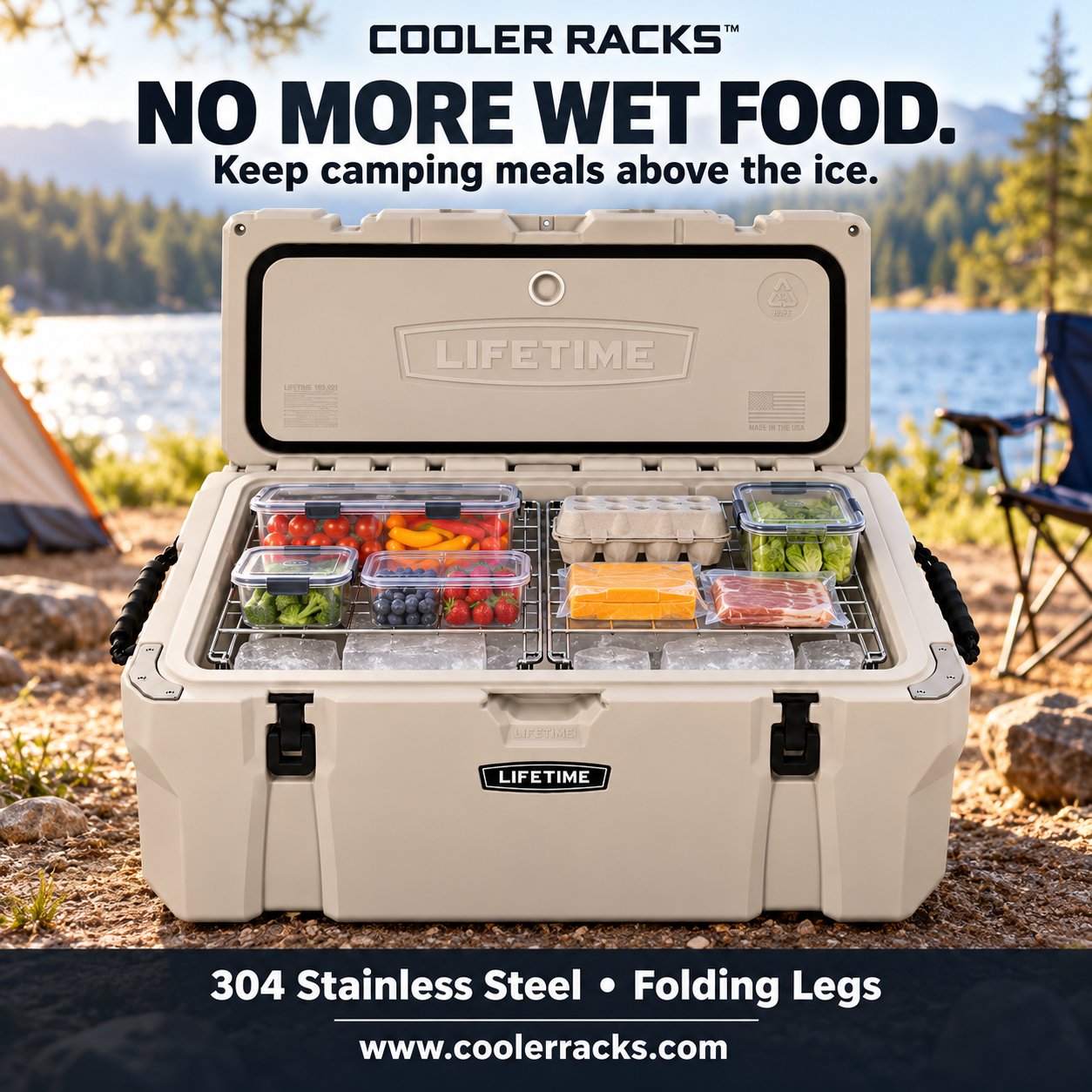
Watch out: A cooler that feels cold at the top can be warmer near the eggs. Put the thermometer next to the carton, not on the lid, and check it before you assume the eggs are safe.
This setup also works for hard-cooked eggs and egg dishes, but those need tighter temperature control because they are already cooked and ready to eat. For shell eggs, the barrier and the thermometer are the two pieces most home cooks skip.
The setup below gives the key steps and timings for keeping shell eggs cold and dry in a cooler.
| Step | What to do | Time or frequency |
|---|---|---|
| Pre-chill the cooler | Add ice or a frozen bottle, then drain meltwater before packing | About 1 hour before loading |
| Build layers | Put ice on the bottom and a barrier above the meltwater line | Before loading food |
| Keep eggs in carton | Store in original carton, pointed end down, dated lid | Throughout trip |
| Check temperature | Place thermometer next to the eggs and aim for 40°F or below | Check when you open the cooler |
| Minimize lid openings | Keep snacks in a separate basket or cooler | Each opening lets warm air in |
| Drain and replenish | Open the drain plug and add fresh ice or a frozen bottle | Once a day or when meltwater reaches the barrier |
How Long Can Eggs Last in an Ice Box?
Eggs can stay safe in a cooler for a limited time, and the answer depends on how cold the cooler stays. If the cooler gets warmer than that, the clock is running.
A practical approach is to plan shorter trips and use fresh ice. Check the cooler's temperature when you open it, and cook or use the eggs as soon as you can. For longer outings, consider USDA FSIS guidance on keeping food safe during outdoor trips to confirm current recommendations.
Is It Safe to Store Eggs on Ice Overnight?
Overnight storage on ice can be safe, but the answer depends on the scenario, not just the clock. Use this guide to decide before you pack.
Camping or a overnight trip: Yes, if you use a hard-sided cooler with block ice, a barrier above meltwater, and a thermometer. Check the temperature before bed and again in the morning. If the cooler stayed at 40°F or below, the eggs are fine to cook. If the thermometer reads above 40°F and you do not know how long it was warm, discard the eggs.
Power outage: Keep eggs in the carton, place them on a rack above meltwater, and add ice as it melts. Do not open the cooler to check every hour, each opening shortens the cold hold. If the cooler rises above 40°F for an extended period, discard the eggs.
Grocery transport: Eggs from the store are already refrigerated. A cooler with ice packs is fine for the ride home, but do not leave them in a hot car. Once home, move them to the refrigerator within two hours. If the trip is longer than two hours and you have no ice, the eggs are at risk.
Temporary refrigerator failure: If your refrigerator quits but the freezer still works, move eggs to a cooler with ice or frozen water bottles. Keep the carton closed and the cooler lid shut. Use a thermometer to confirm 40°F or below. Eggs that stay cold can be used; eggs that warm above 40°F for more than two hours should be discarded.
Serving and buffets: Do not set a carton of shell eggs on a picnic table for hours. If you are serving egg dishes, nest the serving bowl in a larger bowl of ice and replenish it as it melts. The two-hour limit applies to the food, not just the cooler.
Hard-cooked eggs and egg dishes: These are more perishable than shell eggs. Keep them at 40°F or below and discard anything that sat above 40°F for more than two hours. Do not rely on smell or appearance.
A common pattern is that overnight storage fails not because of the ice but because of meltwater and lid openings. Use block ice, a barrier, and a thermometer, and keep the lid shut. If you cannot confirm the temperature, treat the eggs as unsafe and cook with fresh ones.
Keeping Temperature Steady: Meltwater, Condensation and Monitoring
Temperature swings cause most problems in a cooler. Here is what to watch for:
- Meltwater: Keep food above it with a rack, or the water can soak cartons
- Condensation: Moisture forms inside the lid and drips down, so dry eggs before packing
- Lid openings: Each time you open the cooler, warm air rushes in
- Monitoring: A simple cooler thermometer tells you if the cold is holding
Pairing our racks with block ice gives you organized storage above the ice without electricity. How long that cold lasts still depends on the cooler, the weather, and how often you open it.
Can You Freeze Eggs in Their Shell?
No, you should not freeze eggs in their shell. As water inside the egg freezes, it expands and can crack the shell. Cracked eggs are unsafe because bacteria can get inside.
If you want to freeze eggs, crack them into a container, beat them lightly, and freeze the mixture. Use frozen eggs within about a year for the best quality. Thaw them in the refrigerator, not on the counter.
Setting Up Your Cooler for Eggs on Your Next Trip
A good setup makes eggs easier to keep safe. Try this:
- Freeze water bottles or use block ice to last longer
- Place a Cooler Racks™ stainless steel rack near the top to hold eggs above meltwater
- Put drinks and ice on the bottom, below the rack
- Keep raw eggs away from ready-to-eat food
- Check the temperature and use the eggs within a few days
Our CR-SS-10 and CR-SS-15 racks both give 7 inches of elevation and fold down for storage. The 2 x 2-inch grid lets loose ice pass through.
Shop Cooler Racks™ to keep your food dry on your next trip.
Frequently Asked Questions
Is it safe to store eggs on ice overnight?
Storing eggs on ice overnight is safe only if the ice keeps the cooler at or below 40°F (4°C) the entire time. Keep eggs in their original carton so they stay dry. Check the temperature with a cooler thermometer when you close the lid at night. If the ice has mostly melted by morning, discard any eggs that have sat above 40°F for more than two hours in total.
How long can eggs stay in a cooler with ice?
Eggs can stay safe in a cooler with ice for as long as the cooler stays at 40°F (4°C) or below, but practical limits are shorter. Plan to use cooled eggs within a few days and keep them in the coldest part of the cooler, away from the lid. Once temperatures climb above 40°F for more than two hours, the eggs should be thrown out. Refrigerated eggs in a cooler are not the same as eggs in a home refrigerator, so monitor the temperature rather than trusting the calendar.
Can you freeze eggs in their shell?
No, you should not freeze eggs in their shell. The liquid inside expands as it freezes and can crack the shell, which lets bacteria in. Frozen eggs should be removed from the shell first. Beat the whites and yolks together, pour the mixture into freezer-safe containers, and label them with the date. Use thawed eggs in cooked dishes such as baking, scrambles, or casseroles rather than recipes where the egg is served raw.
How should you pack eggs to prevent cracking in a cooler?
Keep eggs in their original cardboard or foam carton and place the carton on an elevated surface, such as a Cooler Racks™ stainless steel rack, so it stays above meltwater. Put the carton in the bottom-protected section of the cooler and avoid stacking heavy items on top. Pack eggs away from heavy items like canned goods and keep the cooler out of direct sun. Handling the cooler gently during loading and unloading also reduces cracks.
FAQ
Can you store eggs on ice in a cooler?
Yes, if you keep the eggs above meltwater on a rack and keep the cooler at or below 40°F.
How long can eggs stay in a cooler?
Eggs should not sit above 40°F for more than two hours. Use fresh ice and keep the lid closed.
Can you freeze eggs in their shell?
No. The shell can crack as the egg freezes. Crack and beat them first, then freeze.
